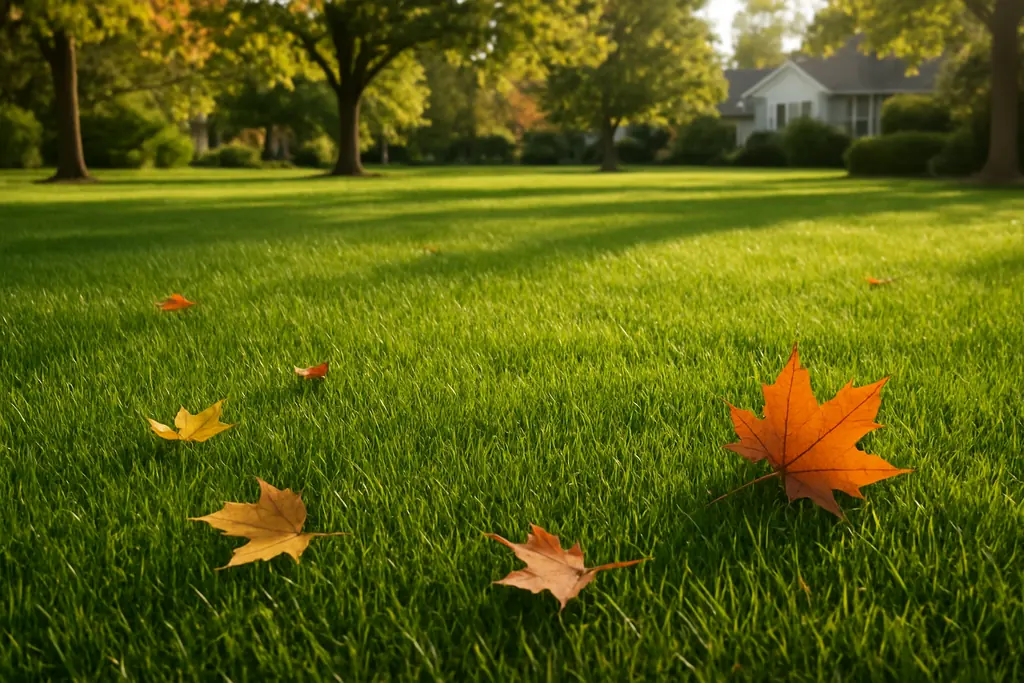
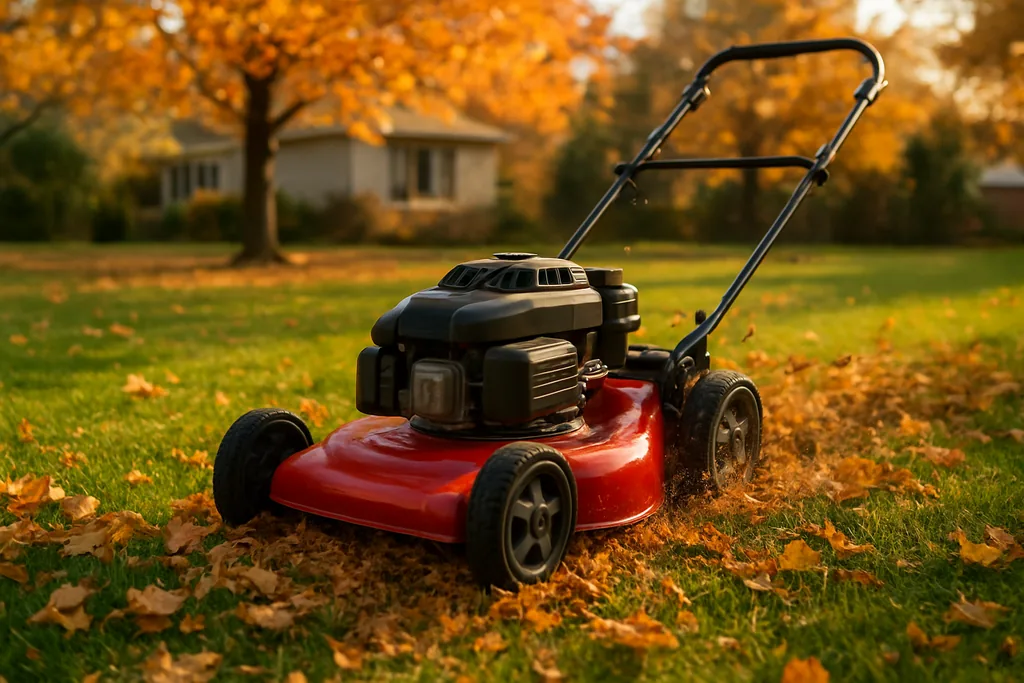
When it comes to leaf mulching vs bagging, the best choice depends on how many leaves you have. Mulching leaves back into the lawn is faster, free, and good for the soil, but it only works on a light to moderate layer. Bagging removes the leaves completely, which is necessary when they are deep, wet, or matted. For most Quad Cities yards, the smart move is to mulch the early light drops and bag or remove the heavy ones. Here is a full comparison to help you decide.
I am Wade Conner, owner of Wade’s Property Services. My crew handles leaves both ways across Davenport, Bettendorf, Moline, and Rock Island, so let me break down when each method wins.
Leaf mulching vs bagging: the quick answer
Mulching means chopping leaves into tiny pieces with a mower and leaving them on the lawn to break down and feed the soil. Bagging means collecting the leaves and removing them from the property. In the leaf mulching vs bagging debate, mulching wins on speed, cost, and soil health for light layers, while bagging wins when the leaf load is heavy enough to smother the grass. Neither is right for every situation, and most homeowners are best served by using both across the fall as the leaf drop changes.
What is leaf mulching?
Mulching leaves is simply mowing over them, ideally with a mulching blade, so they are shredded into small flakes that fall between the grass blades. Those pieces break down over the winter, returning organic matter and nutrients to the soil and even helping suppress some weeds. It is the same idea as mulching grass clippings. Mulching leaves is fast, costs nothing beyond the mowing you were already doing, and is genuinely good for the lawn. The one requirement is that the layer be light enough that the shredded pieces settle into the turf rather than covering it.
Benefits of mulching leaves
Mulching has real advantages when conditions are right:
- It feeds the soil with free organic matter and nutrients.
- It saves time, since you skip raking and bagging entirely.
- It costs nothing beyond a normal mow.
- It reduces waste, keeping leaves out of the landfill and disposal stream.
- It can suppress weeds as the shredded leaves break down.
For a light, dry leaf layer, those benefits make mulching the clear winner.
When bagging is the better choice
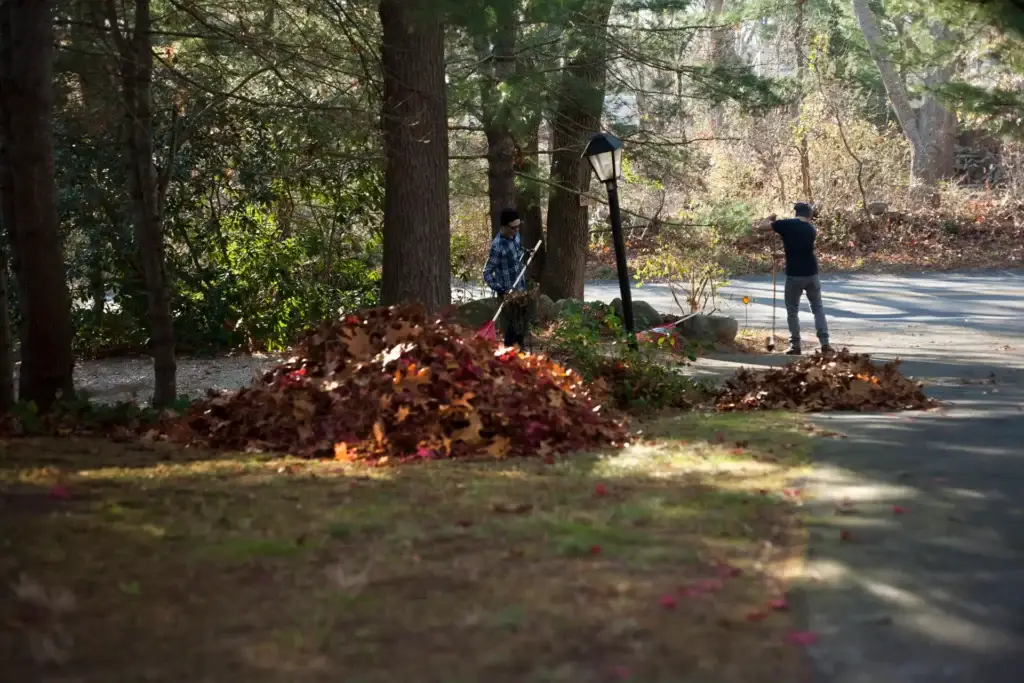
Bagging, or removing the leaves entirely, is the right call when there are simply too many to mulch. A thick, wet, or matted layer cannot be chopped fine enough to settle into the lawn, so mowing it just leaves a smothering mat of debris that breeds snow mold. Heavily wooded yards produce far more leaves than a mower can mulch, especially late in the season. In those cases, gathering and removing the leaves protects the grass. Bagging is also the choice if you want to collect leaves for compost or use them as mulch in your beds rather than on the lawn.
Downsides of each method
Both methods have limits. Mulching fails on heavy or wet leaves, where it leaves a smothering layer instead of helpful mulch, and it requires a mower and dry conditions to work well. Bagging is more work, involves raking or collecting and hauling, and sends leaves off the property rather than feeding the soil, though you can redirect them to compost or beds. Understanding these tradeoffs is the whole point of the leaf mulching vs bagging comparison. The best results come from matching the method to the conditions rather than insisting on one approach all season.
The best approach for a Quad Cities lawn
For our climate and tree cover, a hybrid approach works best. Early in the fall, when the drop is light, mulch the leaves into the lawn as you mow and enjoy the free soil boost. As the drop gets heavier and the leaves start to pile up and mat, switch to bagging or full removal so the lawn is never smothered. By the end of the season, clear everything completely before the first lasting snow. This mix gives you the soil benefits of mulching without the smothering risk of leaving too many leaves on the grass.
What about mulching leaves into beds?
There is a third option worth knowing. You can collect leaves and use shredded leaf mulch in your planting beds rather than on the lawn. A layer of chopped leaves in the beds insulates perennial roots, suppresses weeds, and breaks down into rich soil, all for free. This is a great way to put bagged leaves to work instead of hauling them off. Just avoid piling wet leaves directly against plant stems, where they can cause rot. It is the best of both worlds: you remove leaves from the lawn while still capturing their soil-building value in the beds.
Does mulching or bagging matter for your equipment?
Your mower plays a role in the mulching vs bagging decision. A dedicated mulching mower or a mulching blade chops leaves far finer than a standard blade, which is what lets the pieces settle into the turf rather than sitting on top. If your mower has a bagging attachment, it can pick up and shred leaves in one pass, which is a nice middle ground between the two methods. Standard side-discharge mowers can still mulch light layers but tend to leave larger pieces. Knowing what your equipment does well helps you decide how far you can lean on mulching before you need to switch to bagging or full removal.
The environmental angle
There is also a green case for mulching when conditions allow. Mulching leaves back into the lawn and beds keeps them out of the waste stream, returns nutrients to your soil, and reduces the fuel and bags used to haul them away. Many communities encourage mulching for exactly these reasons. When the leaf load is too heavy to mulch safely, composting the bagged leaves or using them as bed mulch captures most of the same benefit. Either way, you are turning a yard chore into free soil-building material rather than simply throwing it out.
How weather affects your choice
Our Quad Cities weather often makes the mulching vs bagging decision for you. On a dry, breezy fall day with a light leaf layer, mulching is quick and effective. After a rain, or once the leaves are thick and damp, mulching stops working and removal becomes the only good option. Since our fall brings plenty of wet weather, many homeowners find themselves mulching early in the season and bagging or removing later as conditions turn. The practical move is to stay flexible: mulch when the leaves are light and dry, and switch to removal the moment they get heavy or wet. Letting the weather guide the method gives you the best of both without smothering the lawn.
Frequently Asked Questions
Is mulching leaves good for the environment?
Yes. Mulching keeps leaves out of the waste stream and returns nutrients to your soil. When leaves are too heavy to mulch, composting or using them as bed mulch captures similar benefits.
Do I need a special mower to mulch leaves?
A mulching blade or mulching mower chops leaves finest, which works best. A standard mower can mulch light layers but leaves larger pieces, so you may need to remove heavier drops.
Is it better to mulch or bag leaves?
Mulch a light layer to feed the soil, and bag or remove a heavy, wet, or matted layer that would smother the grass. Most yards do best with a mix of both across the season.
Can you mulch too many leaves?
Yes. If the layer is too thick, mowing it just leaves a smothering mat of debris instead of settling into the turf. When leaves are deep or wet, remove them instead.
Do mulched leaves hurt the lawn?
Not when done right. A light layer of finely shredded leaves feeds the soil and helps the lawn. Problems only occur when too many leaves are left whole or piled too thick.
What should I do with bagged leaves?
Compost them, use shredded leaves as free mulch in your beds, or follow local yard waste rules for pickup or drop-off. Just do not leave the bags or piles sitting on the lawn.
Not sure whether to mulch or remove your leaves?
If your yard has more leaves than a mower can handle, we can clear them the right way. Wade’s Property Services is locally owned, fully insured, and rated 5.0 stars across 118 Google reviews. See our leaf removal service, our seasonal cleanup service, check coverage on our Rock Island service area page, or request a free quote below. For composting and mulching research, the University of Illinois Extension is a helpful outside resource.