Figuring out how often to aerate your lawn areas is simpler than most people think. For the heavy clay soil across the Quad Cities, once a year in the fall is the sweet spot for most lawns. Lighter, sandy soils with little traffic can stretch to every other year, while busy, high-traffic yards may want it yearly without fail. Your soil and how hard the lawn gets used are what really decide the schedule. Here is how to dial it in for your yard.
I am Wade Conner, owner of Wade’s Property Services. I have aerated lawns across Davenport, Bettendorf, Moline, and Rock Island for years, and the honest answer on frequency depends more on your soil than on any calendar rule.
How Often to Aerate Your Lawn in the Quad Cities
For our region, once a year is the standard recommendation, and fall is the season. Quad Cities lawns sit mostly on clay, which compacts quickly and holds water. That kind of soil benefits from a yearly core aeration to keep air and water moving to the roots. If you only aerate on one schedule, make it every fall, and you will keep most lawns healthy and thick.
Frequency by soil type
Soil is the biggest factor in how often to aerate your lawn ground. Here is the general guide:
- Heavy clay soil: Once a year. This is most of the Quad Cities, and clay compacts fast.
- Loam or mixed soil: Every one to two years, depending on traffic and thatch.
- Loose, sandy soil: Every two to three years, since it rarely compacts.
Not sure what you have? Push a screwdriver into the ground. If it is a struggle to get a few inches deep, you have compacted or clay soil and should lean toward yearly aeration.
Frequency by how you use your lawn
Use matters just as much as soil. A lawn that gets walked on, played on, or parked on packs down faster. Consider aerating more often if:
- Kids and pets use the yard heavily.
- You host gatherings or park vehicles on the grass.
- The lawn is newer construction, where builders often leave compacted subsoil.
- Water tends to pool or run off after rain.
Those lawns do best on a firm yearly schedule, even on lighter soil.
Can you aerate your lawn too much?
Yes, you can overdo it. Once a year is plenty for nearly every lawn, and even the busiest yards rarely need more than a single fall pass. Aerating too often stresses the grass and provides no extra benefit, since the soil simply does not compact fast enough to justify multiple passes a year. If a service tries to sell you spring and fall aeration on the same healthy lawn, that is usually more than you need. Save the extra visit and put the money toward overseeding or feeding instead.
What time of year should you aerate?
Frequency and timing go together. For our cool-season grasses, early fall is the ideal window, roughly late August through September. The grass is growing hard, the soil is still warm, and there is time to recover before winter. Spring aeration is a fallback if you miss fall, but it can invite crabgrass. Our full guide on when to aerate your lawn walks through the timing in detail.
Signs it is time to aerate again
Rather than watching only the calendar, watch your lawn. It is time to aerate again when water starts pooling, the soil feels hard underfoot, thatch builds up past half an inch, or the grass thins out despite good care. These are the same signs that tell you a lawn needs aeration in the first place, and they are your cue that another pass is due. When two or more show up, put aeration back on the schedule for that fall.
Building aeration into a yearly routine
The easiest approach is to make aeration a fixed part of your fall lawn care, the same way you handle spring cleanup or summer mowing. Once a year, in early fall, aerate and overseed, then feed. That simple rhythm keeps clay soil from ever getting badly compacted, so your lawn never falls into the tired, thin state that takes years to fix. Pairing it with our aeration and overseeding service and a 5-step lawn care program makes the whole routine easy to keep.
Why clay soil changes the schedule
To understand how often to aerate your lawn areas on our ground, it helps to know why clay behaves the way it does. Clay particles are tiny and flat, so they pack together tightly and leave very little pore space for air and water. Every time you walk on the lawn, mow it, or go through a freeze-and-thaw cycle, those particles press closer together. Sandy soil, by contrast, has large, round particles that resist packing and bounce back on their own. That single difference is why a sandy lawn might go years between aerations while a Quad Cities clay lawn benefits from a pass every fall.
It also explains why skipping years on clay tends to snowball. Each season of compaction builds on the last, so a lawn that misses aeration for three or four years is far harder to recover than one that gets a light annual pass. Staying on a yearly schedule keeps the soil from ever reaching that badly packed state, which is easier and cheaper than digging out of it later. In other words, consistency beats intensity. A modest yearly aeration does more good over time than an aggressive one-time effort after years of neglect.
How often to aerate a new lawn
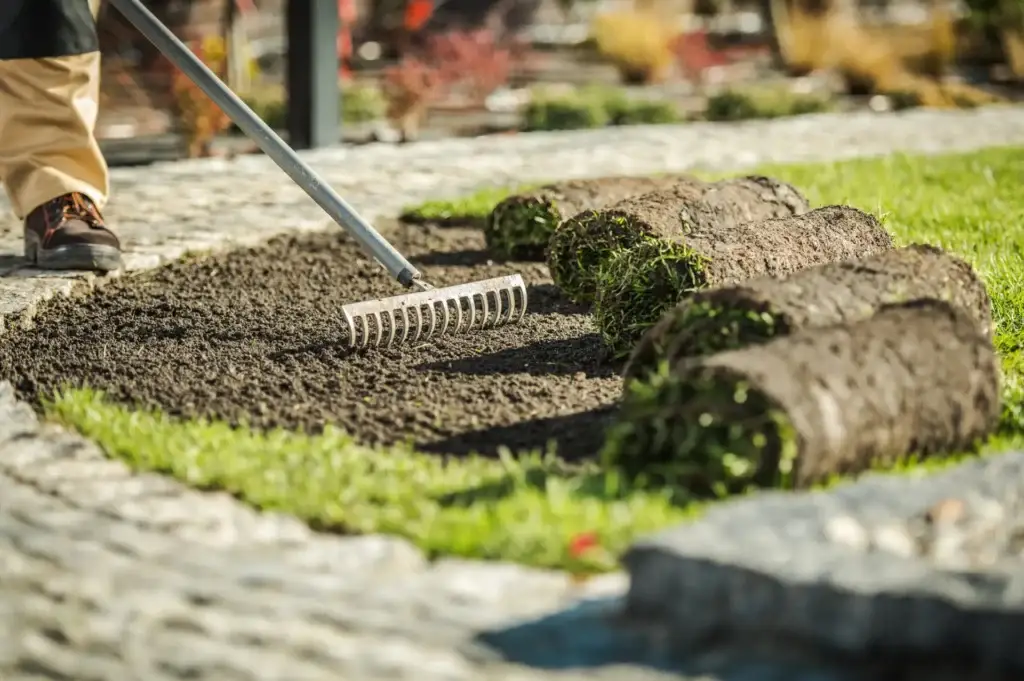
New lawns are a special case. Whether you started from sod or seed, hold off on aeration until the lawn is well established, usually a full growing season. Aerating too soon can tear up shallow young roots before they have a chance to anchor. Once that first season passes, fold the lawn into a normal schedule. On our clay, that means figuring out how often to aerate your lawn areas going forward, which for most new Quad Cities lawns settles into a yearly fall routine. Builder lots deserve extra attention, since construction traffic often leaves the subsoil badly compacted, so those lawns almost always benefit from annual aeration once they are ready.
Frequency for large and commercial lawns
Bigger properties follow the same soil-and-traffic logic, just at a larger scale. A sprawling residential lot, an HOA common area, or a commercial lawn on clay still does best with a yearly fall aeration, and high-traffic commercial turf may benefit from a second pass in spring if it takes heavy foot traffic. The key is matching the schedule to how hard the turf is used, not to a fixed calendar. For larger sites we walk the property and recommend a frequency that keeps the soil open without over-servicing it.
How to remember your aeration schedule
The simplest way to stay on track is to tie aeration to a season rather than a date. Make it your early-fall lawn ritual, right alongside the shift from summer mowing to fall cleanup. Many homeowners book it at the same time each year so they never miss the window. If you use a lawn care plan, aeration can be built right into the fall visit, so the timing is handled for you and you never have to wonder whether this is an aeration year.
Frequently Asked Questions
Does aerating every year damage the lawn?
No. A single annual core aeration is gentle and beneficial for clay lawns. The grass recovers within a couple of weeks, and the long-term result is a healthier, thicker lawn.
How long do the benefits of aeration last?
On clay soil, the benefits of a fall aeration generally carry through the next growing season, which is exactly why a yearly schedule works so well here.
How often should you aerate a clay lawn?
Once a year, ideally in early fall. Clay soil compacts quickly and holds water, so an annual core aeration keeps air and moisture reaching the roots. Most Quad Cities lawns fall into this group.
Can you aerate your lawn twice a year?
You can, but most lawns do not need it. A single fall pass is enough for nearly every yard. Twice-yearly aeration only makes sense in rare cases of severe compaction, and even then a pro should confirm it.
How do I know if my lawn needs aeration this year?
Check for pooling water, hard soil, thick thatch, and thinning grass. If a screwdriver is hard to push into the ground, your lawn is compacted and due for aeration.
Is yearly aeration too much for a new lawn?
Wait until a new lawn is well established, usually a full growing season, before its first aeration. After that, follow the normal yearly schedule for clay soil.
Not sure how often your lawn needs it?
If you are unsure how often to aerate your lawn, a quick look at your soil and traffic gives the answer, and we are happy to help. Wade’s Property Services is locally owned, fully insured, and rated 5.0 stars across 118 Google reviews. See our lawn aeration service, check coverage on our Moline service area page, or request a free quote below. For turf care research, the Iowa State University Extension is a solid outside resource.