The best way to remove leaves from your Quad Cities lawn depends on how many leaves you have, but for most yards a combination of mulching the light drops and blowing or raking the heavy ones works best. There is no single perfect method. Raking, blowing, mowing and mulching, and vacuuming each have a time and place. Below I break down every method, when to use each, and how to clear your leaves fast without wrecking your back or your lawn.
I am Wade Conner, owner of Wade’s Property Services. My crew clears leaves across Davenport, Bettendorf, Moline, and Rock Island every fall, so I have used every method there is. Here is what actually works.
What is the best way to remove leaves?
The honest answer is that the best way to remove leaves is whatever matches the size of your yard and the depth of the leaves. For a light scattering, mowing and mulching is fastest and even good for the lawn. For a moderate layer, a blower gathers leaves into piles quickly. For heavy, wet leaves, raking or a leaf vacuum may be needed. Most homeowners get the best results by combining methods across the season, mulching early and switching to blowing or raking as the drop gets heavier. The key is not to let leaves sit until they mat down, which makes every method harder.
Mowing and mulching leaves
For a thin layer of dry leaves, mowing and mulching is often the best way to remove leaves, because it does two jobs at once. A mulching mower chops the leaves into tiny pieces that fall between the grass blades and break down, feeding the soil. It is fast, requires no bagging, and actually benefits the lawn. The catch is depth. This only works on a light scattering. Run a mower over a thick, wet blanket of leaves and you just leave a smothering mat of debris. Use mulching for the early, light drops, then switch methods as the leaves pile up.
Raking leaves
Raking is the classic method, and it still has its place. It costs nothing but a rake, works in tight spots a blower cannot reach, and lets you gather leaves precisely. The downside is that it is slow and physically demanding, especially in a large or heavily wooded yard. Raking also works better than blowing on wet, matted leaves that a blower cannot budge. For a small yard, a border, or damp leaves stuck to the grass, a rake is often the right tool. For a big property, raking everything by hand is a long weekend you may not want.
Using a leaf blower
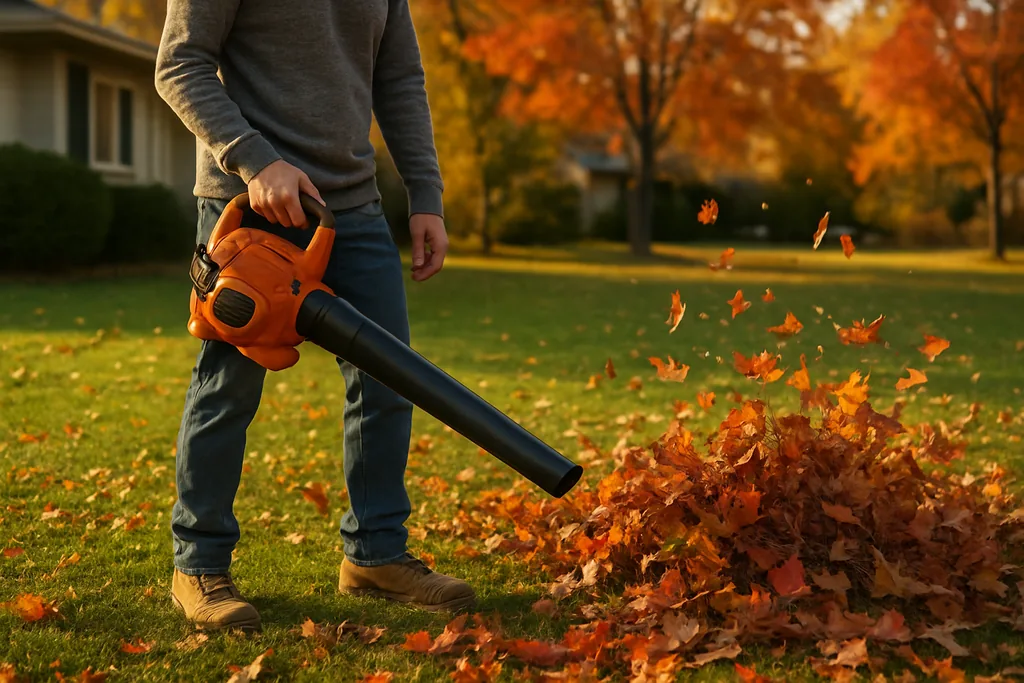
A leaf blower is the fastest way to move dry leaves across a medium or large yard. It gathers leaves into piles or windrows quickly, saving hours of raking, and handles open lawn areas well. Blowers struggle with wet, matted leaves and can be loud, so mind local noise rules and your neighbors. The most efficient approach is to blow leaves into a few piles, then load them onto a tarp for hauling. For most Quad Cities yards with a real leaf load, a blower is the workhorse of the job.
Leaf vacuums and baggers
Leaf vacuums and mower baggers collect and bag leaves in one step, which is handy if you want them contained for disposal. A mower with a bagging attachment picks up and shreds leaves as you mow, reducing their volume. Dedicated leaf vacuums, including tow-behind units for large lots, suck up leaves and grind them down. These tools shine when you need the leaves collected rather than just moved, but they can clog on heavy, wet leaves and take longer than a blower on a big open yard. They are a great finishing tool after blowing leaves into piles.
Best way to remove wet or matted leaves
Wet leaves are the hardest to handle, and they call for different tactics. A blower often cannot move a soaked, matted layer, so raking or a leaf vacuum usually works better. If the leaves have started to mat into the grass, a stiff rake will lift them, though you have to work carefully to avoid tearing up the turf. The real lesson is to not let leaves get to this point. Clearing them while they are still dry and loose, in a couple of passes through the season, avoids the miserable job of removing a heavy wet mat later.
How to remove leaves fast: a simple system
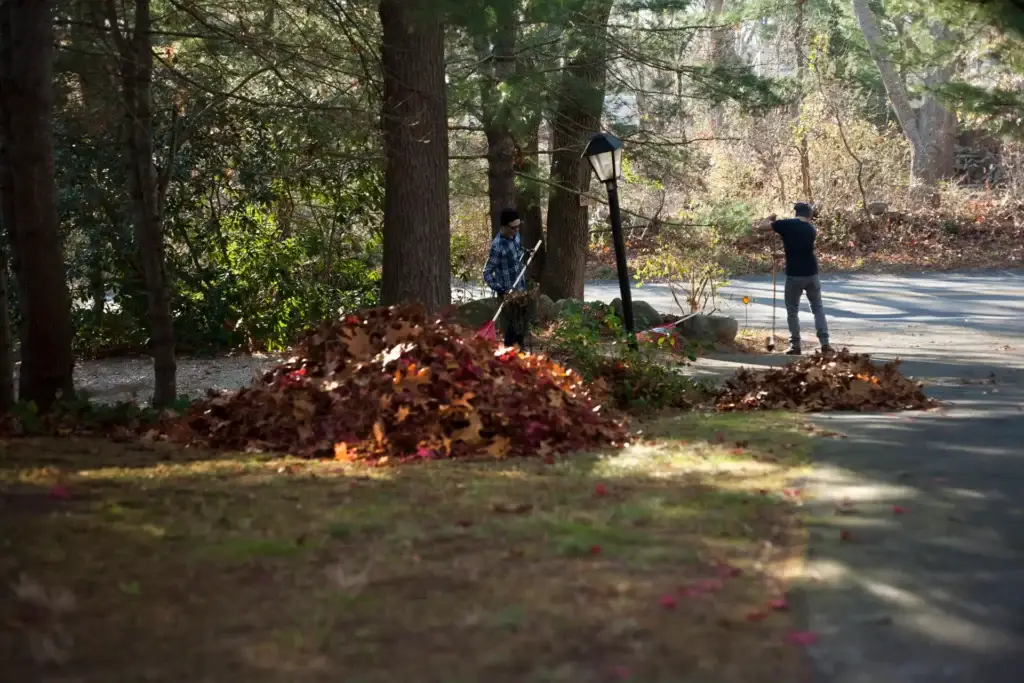
To clear a yard quickly, work with a system rather than randomly attacking piles. Start by mulching any light areas with the mower. Use a blower to push the remaining leaves downwind into a few large piles, working from the edges toward the center. Rake the tight spots and fence lines the blower missed. Then load the piles onto a large tarp and haul them to your disposal spot or the curb, depending on local rules. Working in this order, most yards clear far faster than by raking everything by hand.
Where do the leaves go?
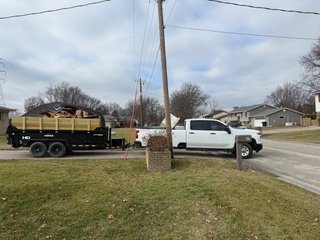
However you gather them, the leaves have to go somewhere. Many Quad Cities communities have specific yard waste rules, curbside leaf pickup on certain weeks, or drop-off sites, so check your city’s guidelines. You can also compost leaves, use shredded leaves as free mulch in your beds, or have them hauled away. A professional service handles the disposal for you, which is a big part of the value. Whatever you choose, do not leave the gathered piles sitting on the lawn, where they will smother the grass just as badly as scattered leaves would.
DIY vs hiring a pro
Any of these methods can be done yourself with the right tools and enough time. In a small yard, that is very doable. In a large or heavily wooded lot, leaf removal becomes a serious, recurring chore all fall, and many homeowners decide the time saved is worth hiring out. A professional crew brings commercial blowers and vacuums, clears the yard in one visit, and hauls everything away. Our full leaf removal service covers exactly what is included. Whichever route you choose, the goal is a lawn that is clear before winter.
The best way to remove leaves without hurting your back
Leaf removal is hard on the body if you do it wrong, so a few tips save your back and your weekend. Use a rake with an ergonomic handle and switch hands often, or lean on a blower for the heavy lifting so you are guiding leaves rather than dragging them. Work with the wind, not against it. Rather than bending to scoop leaves into bags, rake or blow them onto a large tarp and drag the whole load at once. Take the job in a couple of shorter sessions instead of one marathon. And keep up with the leaves through the season so you never face a giant, back-breaking pile. Working smart makes the best way to remove leaves also the easiest way.
Frequently Asked Questions
What tools do I need to remove leaves?
A rake works for small yards, a leaf blower speeds up medium and large ones, and a mower with a mulching or bagging attachment handles light layers. A large tarp makes hauling far easier.
How often should I remove leaves in the fall?
Clear them in a couple of passes rather than one late job. Handling leaves every week or two as they fall keeps each session small and prevents the smothering, matted layer that damages the lawn.
What is the fastest way to remove leaves?
For a medium or large yard, blowing leaves into piles and hauling them on a tarp is fastest. For a light layer, mowing and mulching is quickest of all. Combining methods across the season keeps each job small.
Is it better to rake or mulch leaves?
Mulch a light layer with a mower to feed the soil. Rake or blow a heavy layer, since mulching cannot handle a thick, wet blanket of leaves without smothering the grass.
How do you remove wet, matted leaves?
Wet leaves resist a blower, so a rake or leaf vacuum usually works better. The best fix is prevention, clearing leaves while they are dry and loose rather than letting them mat down.
Can I leave the piles until later?
No. Piles left on the lawn smother the grass just like scattered leaves. Gather and remove or compost them promptly rather than leaving them to sit.
Want your leaves handled for you?
If clearing leaves all fall is not how you want to spend your weekends, we can take care of it. Wade’s Property Services is locally owned, fully insured, and rated 5.0 stars across 118 Google reviews. See our leaf removal service, our seasonal cleanup service, check coverage on our Davenport service area page, or request a free quote below. For yard waste and composting research, the Iowa State University Extension is a helpful outside resource.