The clearest signs your lawn needs aeration are water that pools or runs off, soil that feels rock hard underfoot, a thick spongy thatch layer, and grass that stays thin no matter how much you water and feed it. If your Quad Cities lawn shows two or more of these, compacted soil is almost certainly the problem, and aeration is the fix. This guide walks through each sign, plus a couple of simple at-home tests so you can check for yourself.
I am Wade Conner, owner of Wade’s Property Services. I read these signs on lawns across Davenport, Bettendorf, Moline, and Rock Island every fall, and once you know what to look for, they are easy to spot.
The main signs your lawn needs aeration
Here are the signs your lawn needs aeration that I check first on any yard:
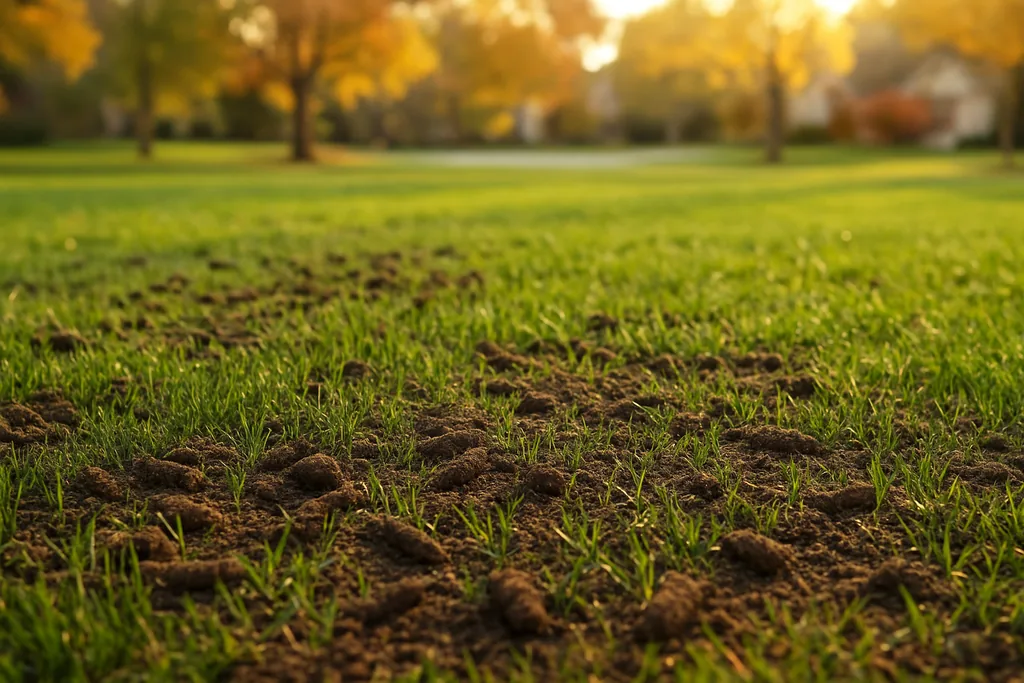
- Water pools or runs off. Healthy soil absorbs water. Compacted soil sheds it, leaving puddles or runoff after rain and watering.
- The ground feels hard. If the lawn is tough and unforgiving to walk on, the soil underneath is packed tight.
- Thick thatch. More than half an inch of spongy brown buildup between the grass and soil blocks air and water.
- Thin, patchy grass. A lawn that stays sparse despite good care is often starved for air and nutrients at the root.
- Worn, bald areas. High-traffic paths and spots that never fill in point to compaction.
Two simple tests you can do today
You do not need special tools to confirm the signs your lawn needs aeration. Try these:
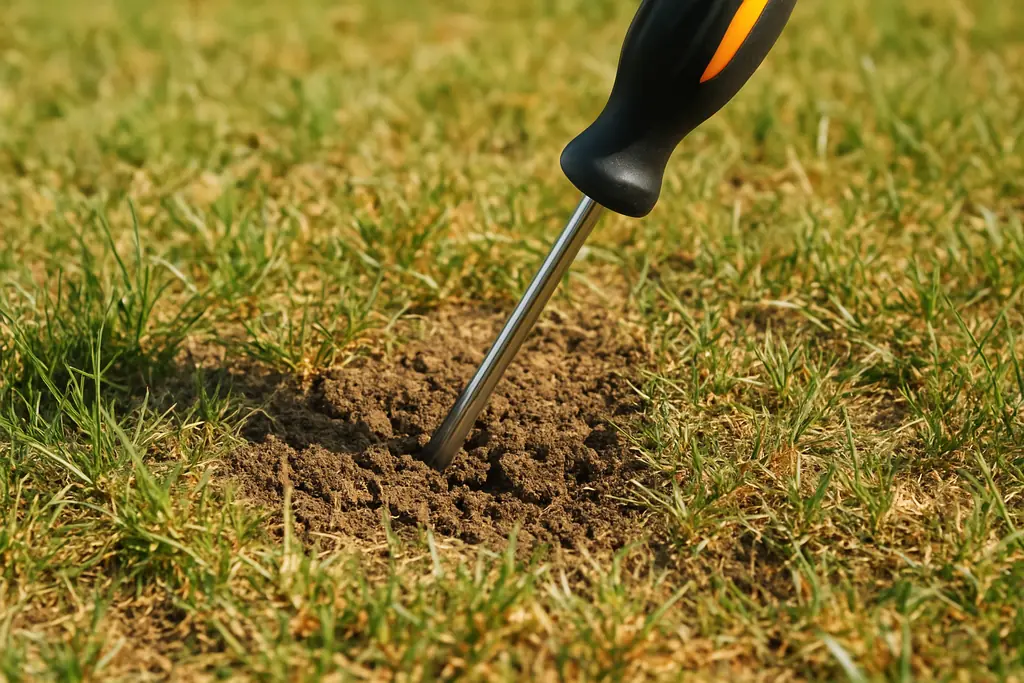
- The screwdriver test. Push a screwdriver into the lawn. In healthy soil it slides in with light pressure. If you have to force it, your soil is compacted.
- The plug test. Dig out a small square of turf about three inches deep. If the roots are shallow and the soil is dense and dry below, air and water are not getting down there.
Either test takes two minutes and tells you more than guessing from the surface.
Why Quad Cities lawns compact so easily
Local soil is the reason these signs show up so often here. The clay across Scott County and Rock Island County packs down fast, holds water, and squeezes out the air pockets roots need. Add foot traffic, mowers, and our freeze and thaw cycles, and even a well-kept lawn can turn hard over a couple of seasons. That is why so many lawns in the area show the classic signs of needing aeration, and why a yearly fall pass makes such a difference on our ground.
Signs it is compaction, not something else
A thin lawn can have several causes, so it helps to rule things out. Compaction is the likely culprit when the problem covers large areas rather than small spots, when water clearly pools or runs off, and when the soil is physically hard to penetrate. If instead you see specific patches with fungus, insects, or pet damage, that points to a different issue. When the whole lawn is tired and the ground is hard, though, aeration is almost always the answer. If you are weighing whether it is worth doing, our guide on whether lawn aeration is worth it lays out the value.
What happens if you ignore the signs
Left alone, compaction only gets worse. Roots stay shallow and weak, so the lawn struggles more each summer, thins out further, and opens the door to weeds that thrive where grass cannot. Water runs off instead of soaking in, wasting both rain and irrigation. Over a few years, a lawn that could have been fixed with a simple fall aeration turns into a project that needs reseeding or renovation. Catching the signs early and aerating keeps small problems from becoming big ones.
What compaction does to your grass roots
To really understand these warning signs, it helps to picture what is happening below the surface. Grass roots need three things from soil: air, water, and room to grow. Compacted clay squeezes out the air pockets and closes off the channels that carry water down, so roots have nowhere to go. Instead of reaching deep for moisture and nutrients, they stay shallow and weak near the surface. A lawn with shallow roots dries out fast, browns quickly in summer, and struggles to recover from any stress. Every visible symptom, the pooling water, the thinning grass, the hard ground, traces back to that same underground problem. When you read the signs your lawn needs aeration and act on them, what you are really doing is giving the roots room to grow back down where they belong.
This is also why aeration produces such visible results. Once the soil is opened, roots push deeper within a single season, and a deeper-rooted lawn is a more drought-resistant, self-sufficient lawn. The change you see on the surface the next spring is really a reflection of a healthier root system underneath. Reading the signs early simply means you fix the root problem before it costs you the whole lawn.
Seasonal signs your lawn needs aeration to watch for
Some signs show up most clearly at certain times of year, so it helps to know when to look. In spring, watch for standing water and slow green-up, which point to soil that cannot drain or warm properly. Through summer, a compacted lawn browns out and wilts faster than a healthy one, because shallow roots cannot reach moisture. In fall, thinning turf and heavy thatch become obvious as growth slows. These seasonal clues are all versions of the same signs your lawn needs aeration story, and fall is when you can act on them most effectively. If your lawn struggled through the summer heat, that is often the loudest signal of all that the soil underneath is packed too tight.
Compaction vs drought stress
It is easy to confuse a compacted lawn with one that simply needs water, since both look tired and brown. The tell is what happens after you water. A drought-stressed lawn on healthy soil greens back up within a few days of a good soak. A compacted lawn barely responds, because the water runs off or pools instead of reaching the roots. If you find yourself watering more and more with less and less to show for it, compaction is usually the hidden reason, and aeration is what breaks the cycle.
What to do when you spot the signs
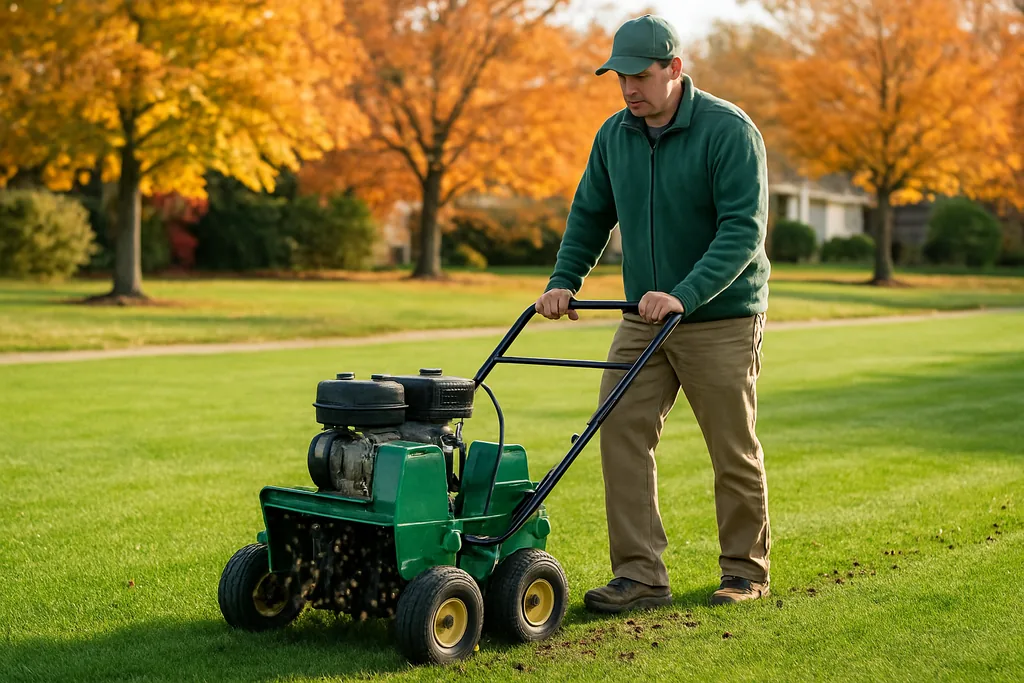
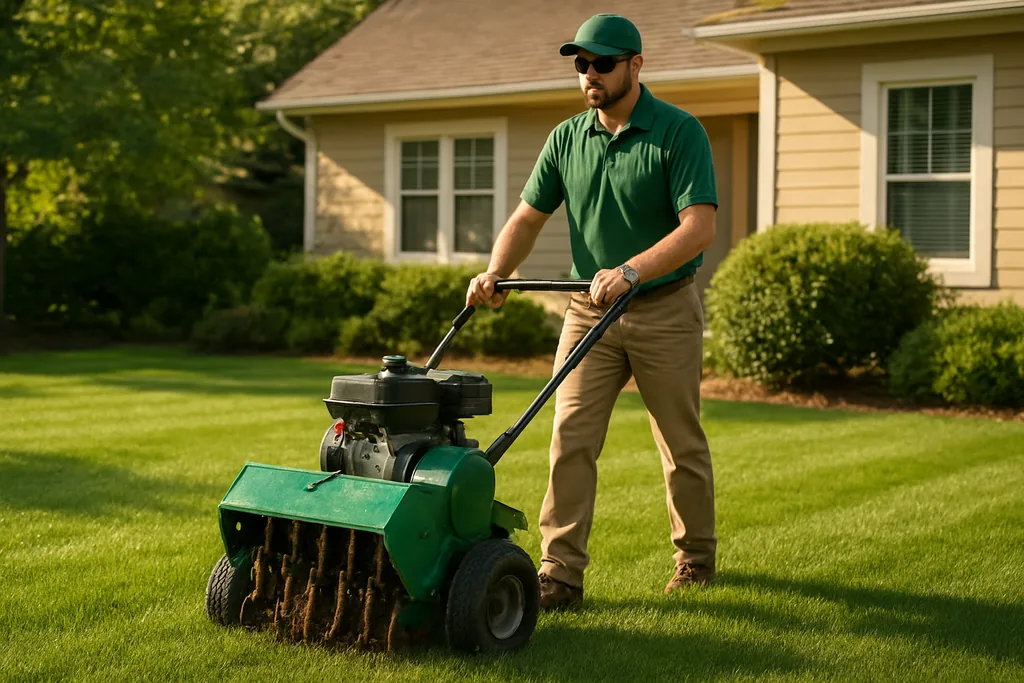
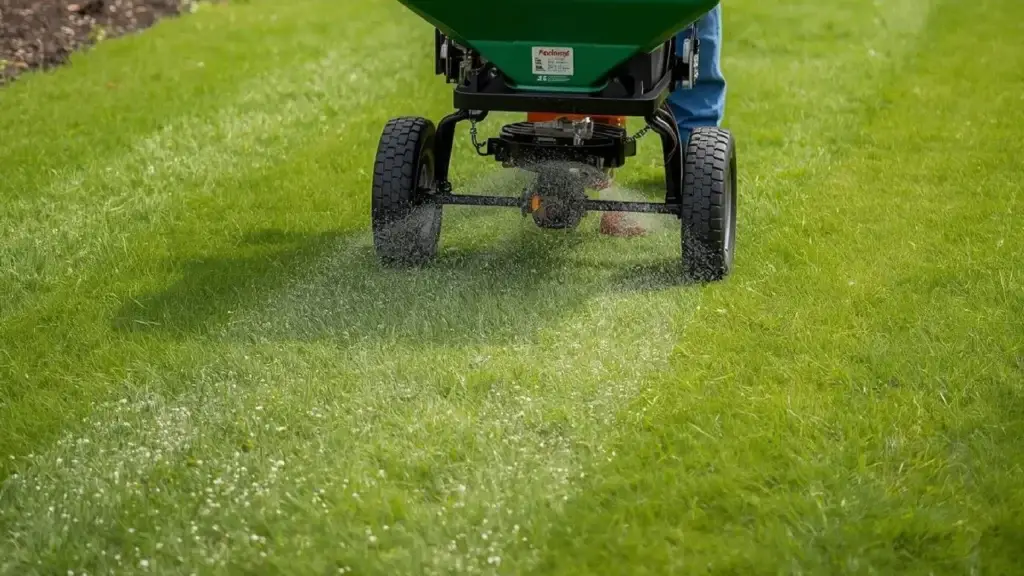
If your lawn is showing these signs, the move is a fall core aeration, ideally paired with overseeding to fill in the thin areas. Timing matters, so check our guide on when to aerate your lawn for the best window. Follow up with feeding and consistent watering, and the lawn responds quickly. Our aeration and overseeding service handles the whole process in one visit.
How compaction sneaks up on a lawn
One reason these signs catch people off guard is that compaction happens slowly. There is no single day your lawn goes from healthy to compacted. Instead, each mow, each rain, and each season presses the clay a little tighter, so the decline is gradual enough to miss until the symptoms are obvious. By the time water is clearly pooling or the grass has thinned out, the soil has usually been getting harder for a couple of years. That is why it pays to run the screwdriver test each fall rather than waiting for the lawn to look bad. A two-minute check catches the problem while it is still easy and cheap to fix.
Frequently Asked Questions
Can compacted soil fix itself over time?
Not really. Once clay is compacted, it stays that way until something physically opens it up. Foot traffic and weather keep it packed, so aeration is the practical way to reverse it.
How deep should aeration go?
A good core aeration pulls plugs about two to three inches deep. That reaches the root zone where compaction does the most damage, which is why proper core equipment matters on clay.
How do I know for sure if my lawn needs aeration?
Do the screwdriver test. If it is hard to push a screwdriver a few inches into the soil, your lawn is compacted and needs aeration. Pooling water, thick thatch, and thinning grass confirm it.
Can a lawn look green and still need aeration?
Yes. A lawn can hold color while the soil beneath is compacted. If water runs off and the ground is hard, aeration will still help even on a green lawn, especially heading into next summer.
Does thatch mean my lawn needs aeration?
A thatch layer thicker than half an inch is a strong sign. Core aeration helps break thatch down naturally by mixing soil microbes into it, which is one of its underrated benefits.
Should I aerate if only part of my lawn shows signs?
It is usually best to aerate the whole lawn in one pass, since compaction often extends beyond the obvious spots and the cost difference is small.
See the signs? Let’s take a look
If your lawn is showing the signs your lawn needs aeration, fall is the time to act. Wade’s Property Services is locally owned, fully insured, and rated 5.0 stars across 118 Google reviews. See our lawn aeration service, check coverage on our Rock Island service area page, or request a free quote below. For lawn diagnostics, the Purdue University Turfgrass Program is a helpful outside resource.