Aerating clay soil is one of the smartest things you can do for a Quad Cities lawn, and it is also where the most mistakes happen. Clay compacts fast, holds water, and squeezes the air out of the root zone, so it needs core aeration more than almost any other soil type. But timing and technique matter even more on clay than on loose soil. Here is how to aerate our stubborn local clay the right way, and why it makes such a difference.
I am Wade Conner, owner of Wade’s Property Services. Most of the lawns I work on across Davenport, Bettendorf, Moline, and Rock Island sit on heavy clay, so I have learned exactly what our soil needs. Let me walk you through it.
Why clay soil is so hard on a lawn
Clay is made of tiny, flat particles that pack together tightly and leave very little room for air and water. On a clay soil lawn, that means water pools on the surface or runs off instead of soaking in, roots stay shallow because they cannot push through the dense ground, and every step, mow, and freeze-thaw cycle presses the soil tighter. The result is a lawn that dries out fast in summer, thins over time, and struggles no matter how much you water and feed it. The good news is that aeration directly fixes the core problem.
How aerating clay soil helps
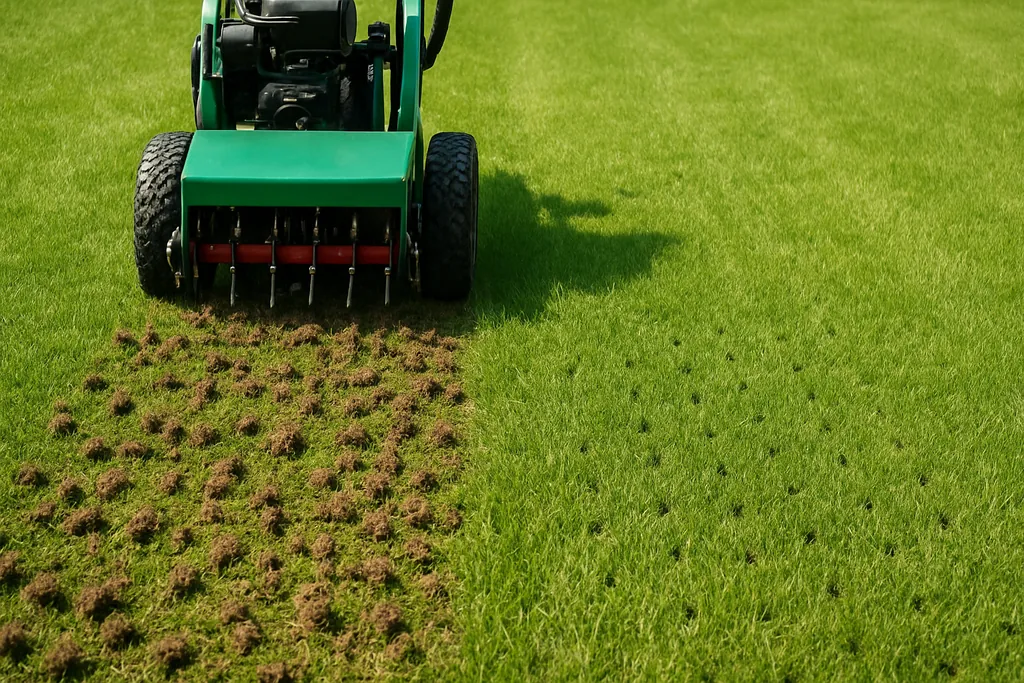
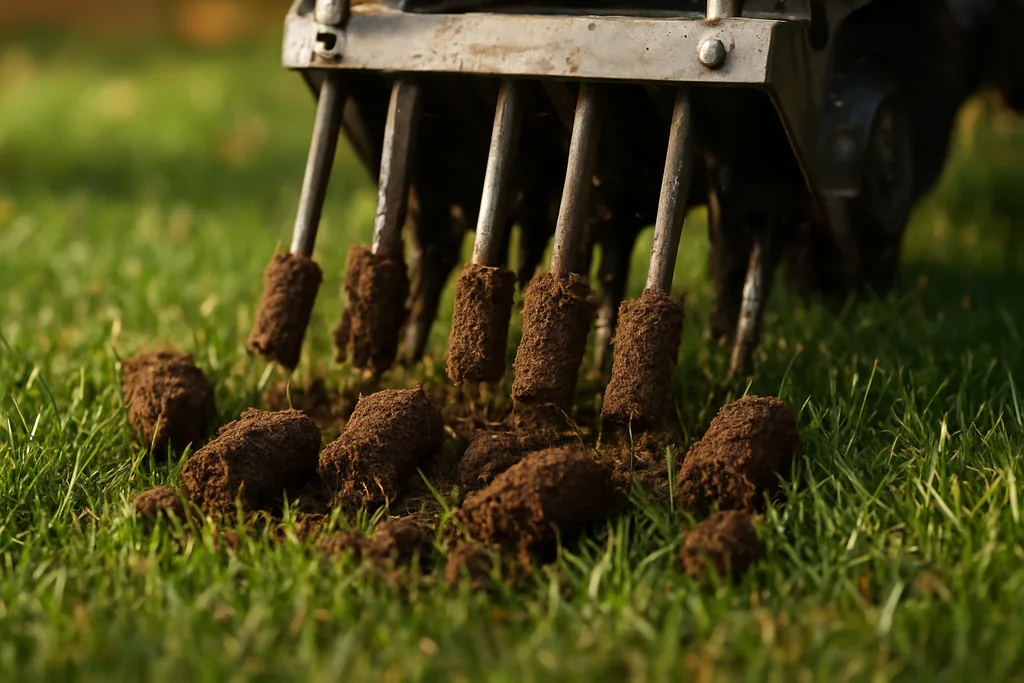
Aerating clay soil works by pulling thousands of small plugs out of the ground, which instantly relieves compaction and opens real channels for air, water, and nutrients. On clay, those channels are a big deal, because without them water and fertilizer simply sit on a hard crust. Once the soil is opened, roots grow deeper, water soaks in instead of running off, and the whole lawn becomes more resilient. Over a few seasons of regular aeration, the soil structure itself slowly improves as roots, organic matter, and soil life work their way down into the loosened ground.
The best time for aerating clay soil in the Quad Cities
Timing is everything on clay. The best time is early fall, from late August through September, when cool-season grasses are growing strong and can recover fast. Just as important is soil moisture. Aerating clay soil works best when the ground is slightly moist, not soaking wet and not bone dry. Dry clay is too hard for the tines to penetrate, and wet clay just smears and reseals. A good rule is to aerate a day or two after a light rain, or water the lawn the day before. Our guide on when to aerate your lawn covers the full timing.
Core aeration is a must on clay
On clay soil, the method matters more than anywhere else. Core aeration, which removes plugs, is the only type that truly relieves compaction. Spike aeration, which pushes a solid tine into the ground, actually compresses clay further and makes the problem worse over time. If you are dealing with clay, insist on true core aeration that pulls plugs. Our full breakdown of core aeration vs spike aeration explains exactly why this matters so much on our soil.
Breaking up clay soil over time
One aeration helps, but breaking up clay soil for good is a multi-year project. Each fall pass loosens the top few inches a little more, and pairing aeration with overseeding and organic matter accelerates the process. Leaving the soil plugs on the surface to break down adds organic material back into the clay. Topdressing with a thin layer of compost after aeration helps even more, feeding soil life that slowly opens up the ground. There is no overnight fix for clay, but consistent annual aeration steadily transforms a hard, lifeless soil into one that actually supports a healthy lawn.
Best aerator for clay soil
For clay, a heavy core aerator with hollow tines is the right tool. Lightweight spike rollers and strap-on shoes do almost nothing on packed clay. The commercial core aerators the pros use are weighted to drive the tines deep and pull full plugs even from hard ground, which is often more than a rented consumer unit can manage. That is one reason a professional service tends to get better results on clay than a DIY rental, especially on a lawn that has never been aerated.
What to do after aerating clay soil
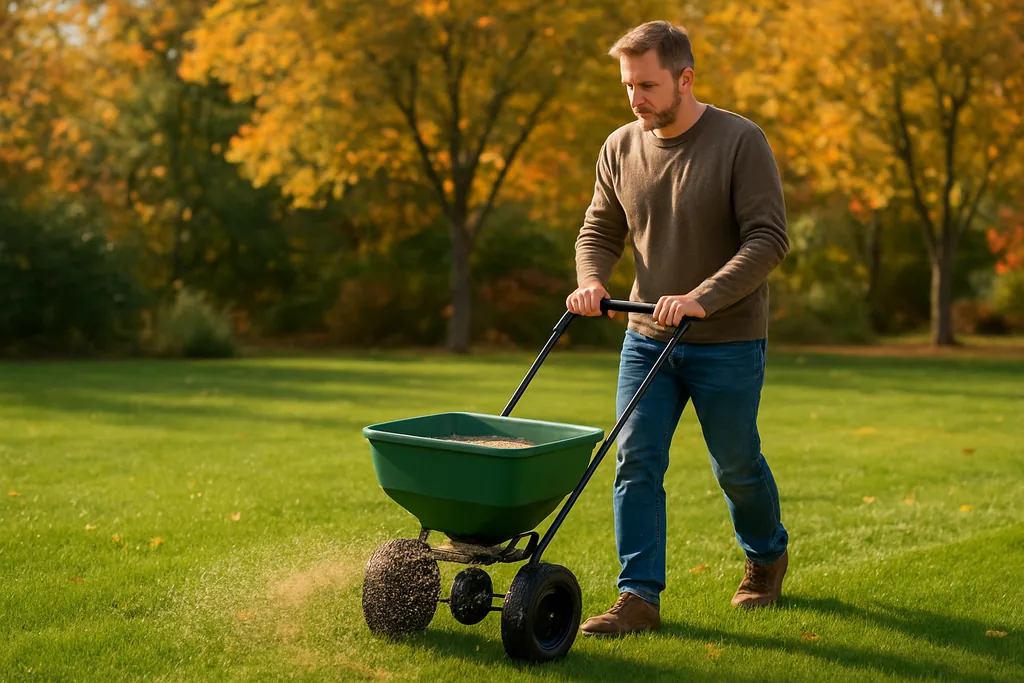
The steps after aeration are where clay lawns gain the most. Overseed right away so fresh seed drops into the open holes, apply a starter fertilizer so nutrients reach the roots through the new channels, and water lightly and often to keep everything moist. Leave the plugs to break down. Skip weed control until the new grass has been mowed a few times. Done together, these steps turn a single aeration into a real improvement in your soil and your lawn.
How clay soil changes over years of aeration
Aerating clay soil once helps, but the real transformation happens over several seasons. Each fall pass loosens the top few inches a little more, and every year the soil holds air and water a bit better than the last. As roots reach deeper and organic matter works its way down through the plugs, the clay slowly develops the structure it was missing. By the third or fourth year of consistent aeration, many lawns that once shed water and browned out every summer hold moisture and stay green far longer. It is a gradual process, but it compounds, which is why the homeowners who commit to yearly aeration end up with the best lawns on the block.
Aerating clay soil vs replacing it
Some homeowners wonder whether it is worth tearing out clay and trucking in better soil. For most lawns, that is expensive, disruptive, and unnecessary. Working with the clay through regular aeration, adding organic matter, and overseeding steadily improves what you already have at a fraction of the cost. Full soil replacement only makes sense for small beds or severe drainage projects, not an entire lawn. For the lawn itself, aeration is almost always the smarter, cheaper path.
A simple yearly clay soil routine
The easiest way to keep clay from ever getting badly compacted is to build a short yearly routine and stick to it. Each early fall, core aerate the lawn, overseed the thin areas while the holes are open, feed with a starter fertilizer, and leave the plugs to break down. That is it. Four steps, once a year, done in the span of a couple of weeks. Homeowners who follow this simple rhythm rarely deal with the standing water, thin turf, and hard ground that plague neglected clay lawns. The soil keeps improving instead of slowly packing tighter, so the lawn gets a little better every season rather than a little worse. On our clay, consistency really is the whole secret, and it costs far less over time than rescuing a lawn that has been left to harden for years.
Frequently Asked Questions
Is it OK to aerate clay soil every year?
Yes. Annual core aeration is exactly what clay soil needs, since it compacts so quickly. The lawn recovers within a couple of weeks and the long-term benefit to the soil is significant.
Does topdressing with compost help clay soil?
Very much. A thin layer of compost after aeration feeds soil life and adds organic matter that gradually loosens the clay over time. It is one of the best ways to speed up soil improvement.
How often should you aerate clay soil?
Once a year, ideally in early fall. Clay compacts quickly, so an annual core aeration keeps air and water moving to the roots. Skipping years lets compaction build up and become much harder to reverse.
Can you aerate clay soil that is dry?
It is difficult. Dry clay is too hard for the tines to penetrate well. Water the lawn the day before, or aerate a day or two after rain, so the soil is slightly moist but not soggy.
Does aerating clay soil really make a difference?
Yes, a big one. On compacted clay, aeration is one of the few things that genuinely relieves the compaction and lets roots, water, and nutrients get where they need to go. The results are usually clear by the next spring.
What is the best way to break up clay soil in a lawn?
Annual core aeration, combined with overseeding, leaving the plugs, and topdressing with compost. Over several seasons, this steadily loosens the clay in a way that does not damage the existing lawn.
Ready to tackle your clay soil?
Aerating clay soil is the foundation of a healthy Quad Cities lawn, and fall is the time to do it. Wade’s Property Services is locally owned, fully insured, and rated 5.0 stars across 118 Google reviews. See our lawn aeration service, pair it with aeration and overseeding, check coverage on our Bettendorf service area page, or request a free quote below. For soil science, the Iowa State University Extension is a helpful outside resource.