If there is one lawn service that gives Quad Cities homeowners the biggest bang for their buck, it is aeration and overseeding done together in the fall. Aeration opens up compacted clay soil, and overseeding drops fresh grass seed right into those openings for excellent germination. Do them as a pair in September and your lawn comes back thicker, greener, and tougher the following spring. Here is exactly how it works and how to get it right.
I am Wade Conner, owner of Wade’s Property Services. Aeration and overseeding is the service I recommend most often here, because it works with our clay soil instead of fighting it. Let me walk you through the whole process.
Why aeration and overseeding work best together
On their own, each service helps. Together, they multiply. Overseeding by itself often fails because the seed lands on hard, compacted soil and never makes good contact. Aeration by itself relieves compaction but leaves thin spots to fill in slowly. Combine them and the aeration holes become perfect little seed pockets, protected and in direct contact with soil. That is why aeration and overseeding is the single most effective fall service for a tired Quad Cities lawn.
When to overseed your lawn in the Quad Cities
Timing is everything. The best time to overseed your lawn here is early fall, from late August through late September. Knowing when to overseed lawn areas comes down to soil temperature and daylight. In early fall the soil is still warm enough for fast germination, the air is cooling, and weed pressure is low. That combination gives new grass a strong head start before winter. Spring overseeding is possible, but it competes with crabgrass and summer heat, so fall wins for our climate almost every time.
How aeration and overseeding works, step by step
Here is the process we follow on a typical job:
- Mow a little short. Cutting slightly lower than normal helps seed reach the soil.
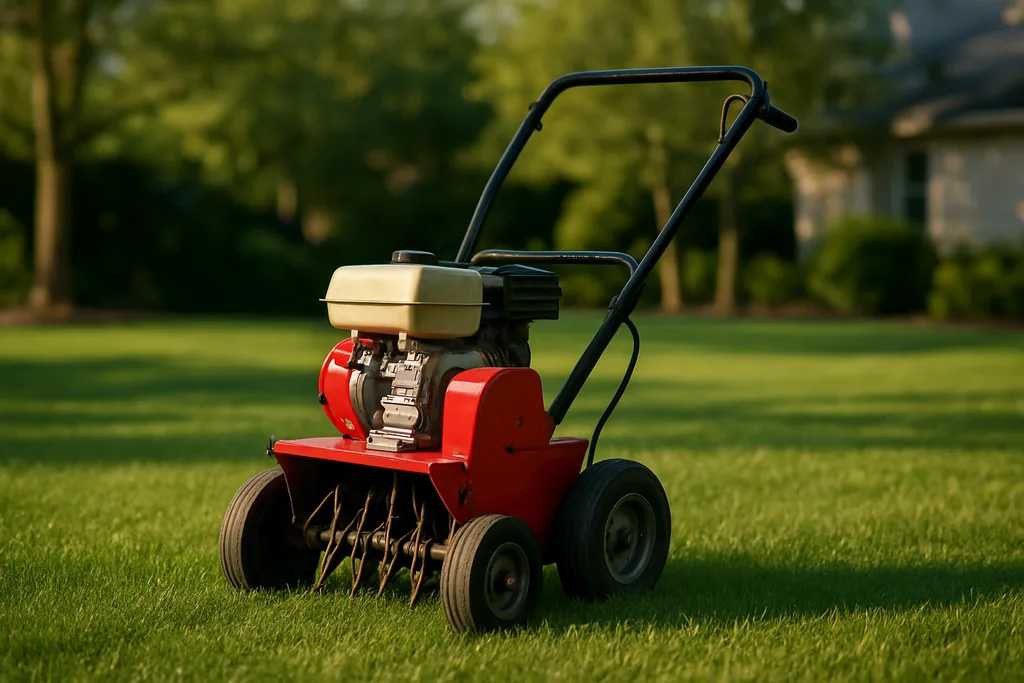
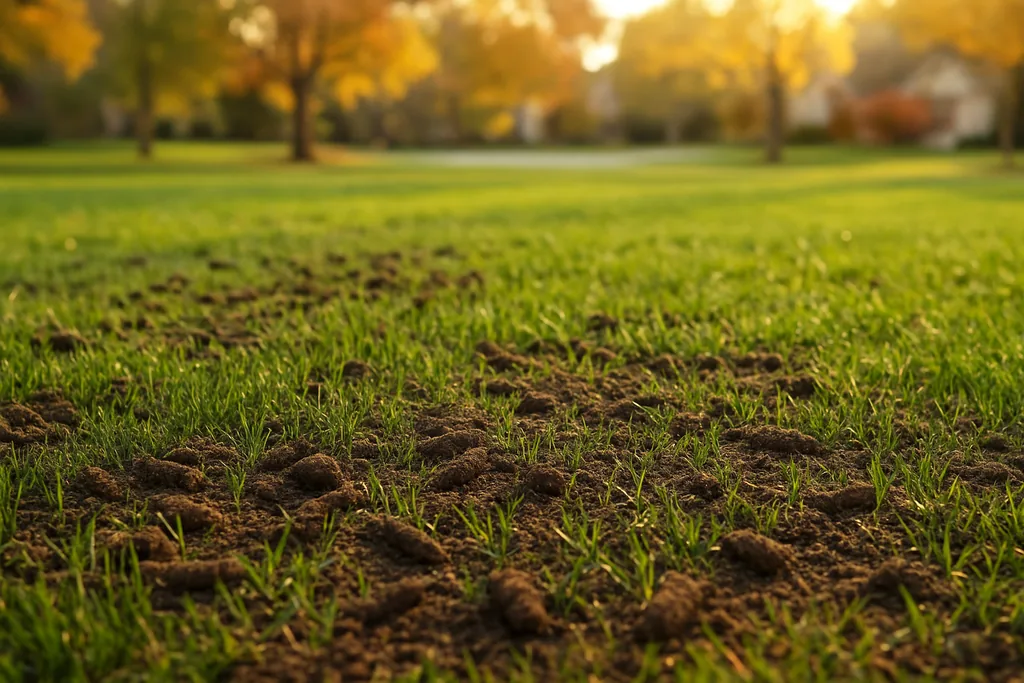
- Core aerate. A machine pulls plugs across the whole lawn, opening the soil.
- Spread quality seed. We overseed with a premium blend matched to Quad Cities conditions.
- Feed with starter fertilizer. This gives new seedlings the nutrients they need.
- Water consistently. Light, frequent watering keeps the seedbed moist for germination.
Done in that order, the seed settles into the aeration holes and comes up evenly across the lawn.
Best grass seed for overseeding Quad Cities lawns
The best grass seed for overseeding here is a cool-season blend, usually a mix of Kentucky bluegrass, perennial ryegrass, and turf-type tall fescue. Bluegrass spreads and fills in, ryegrass germinates fast, and fescue adds drought toughness. A quality blend handles our hot summers and cold winters far better than a single-species bargain bag. If your lawn is mostly shaded, a shade-tolerant fescue mix is the smarter pick. We match the seed to your specific yard rather than using a one-size-fits-all bag.
How much seed do you need?
For overseeding an existing lawn, the general rule is about three to four pounds of seed per thousand square feet. A brand-new lawn from scratch needs closer to double that. Going heavier than recommended does not help, since crowded seedlings compete with each other. Measuring your lawn first saves money and gives more even coverage. When we handle aeration and overseeding, we calculate the right amount for your lot so nothing is wasted.
Caring for your lawn after aeration and overseeding
The two weeks after seeding matter most. Keep the top inch of soil consistently moist with light watering once or twice a day, rather than one heavy soak. Stay off the new grass as much as possible, and hold off on mowing until the new seedlings reach about three inches. Skip weed control products until you have mowed the new grass a few times, since they can stop seed from germinating. A little patience here pays off with a thick, even lawn.
Aeration and overseeding cost in the Quad Cities
For a typical Quad Cities lawn, combined aeration and overseeding usually runs somewhere between 150 and 400 dollars, depending on lot size, seed quality, and access. That is less than booking each service separately, and the results last far longer than a single seeding on hard soil. Given how much it improves a lawn heading into the next growing season, it is one of the best-value services in lawn care.
DIY vs professional aerating and overseeding
You can rent an aerator and buy seed yourself, and for a small, flat yard that can work. The challenge is doing both steps well in one window, hauling a heavy machine, and getting even seed coverage. A professional service does it all in one visit with commercial equipment and a seed blend matched to your lawn. For most homeowners, the time saved and the better results make hiring a pro worth it. Our aeration and overseeding service pairs perfectly with a season-long 5-step lawn care program to keep that new grass thriving.
What results to expect afterward
Give it a little time. In the first two to three weeks you will see fine new blades come up in the aeration holes and across the thin spots. By four to six weeks the lawn looks noticeably fuller, and after the first mow or two the new grass blends in with the old. The real payoff shows the next spring, when your lawn greens up earlier, comes in thicker, and handles summer heat far better than it did before. Because the seed rooted into loosened soil rather than sitting on a hard crust, those results hold up season after season. Homeowners are often surprised how much difference one fall visit makes, especially on a lawn that had been stuck thin for years on compacted clay.
Signs your lawn needs overseeding
Not every lawn needs seed every year, so how do you know if yours does? Look for these signs:
- Thin or patchy areas where the soil shows through the grass.
- Bare spots from pets, foot traffic, or old damage.
- A lawn that looks tired and less dense than it used to be.
- More weeds creeping in, since thin turf leaves room for them.
- An older lawn that has never been overseeded and has lost its thickness.
If two or more of these describe your yard, fall is the time to act. Pairing seed with core aeration gives those thin areas the best possible chance to fill in before winter.
Common overseeding mistakes to avoid
Even with the right timing, a few missteps can waste your effort and money. The most common mistakes I see are seeding on hard, unaerated soil so the seed never takes, letting the seedbed dry out during the critical first two weeks, and mowing too soon before the young grass is rooted. Homeowners also tend to apply weed control right after seeding, which stops germination cold. Finally, using a cheap single-species seed bag often leads to a patchy, weak result. Avoid those and your new grass fills in evenly. This is a big part of why doing the job as a combined service pays off. The steps are simple, but the order and the follow-up care are what actually make the difference between a thick lawn and a disappointing one.
Where fall seeding fits in your lawn’s year
Think of the fall as your lawn’s reset button. Spring is for cleanup and early feeding, summer is about steady mowing and watering through the heat, and fall is when you make real improvements to the soil and the turf itself. Seeding in the fall means the new grass has two cool growing seasons, this fall and next spring, to establish before it ever faces summer stress. That head start is exactly why the pros push people toward fall rather than spring for this work. If you only schedule one soil-improving service all year, this is the one to book, and early fall in the Quad Cities is the window that matters most. Miss it, and you are usually waiting a full year for the next good opportunity.
Frequently Asked Questions
How long after overseeding can I mow?
Wait until the new grass reaches about three inches, which is usually two to three weeks after seeding. Use a sharp blade and a higher cut for the first few mows so you do not pull up young seedlings.
Should you fertilize after overseeding?
Yes. A starter fertilizer applied at seeding gives new seedlings the phosphorus and nitrogen they need to establish. Follow up with a fall feeding a few weeks later as part of a full lawn care program.
How often should you overseed your lawn?
Most Quad Cities lawns benefit from overseeding every one to two years, especially when paired with fall aeration. Lawns with thin spots or heavy traffic may want it yearly.
Will grass seed grow if I just throw it down?
Rarely well. Seed needs soil contact to germinate, so scattering it on hard, unaerated ground usually gives poor results. That is exactly why pairing seed with aeration works so much better.
Ready to aerate and overseed this fall?
Early fall is the ideal window, and it closes fast. If you want a thicker lawn next spring, the two services together is the move to make now. Wade’s Property Services is locally owned, fully insured, and rated 5.0 stars across 118 Google reviews. See our lawn aeration service, learn more about whether aeration is worth it, check coverage on our Davenport service area page, or request a free quote below. For seeding research, the Iowa State University Extension is a helpful outside resource.