When it comes to core aeration vs spike aeration, the short version is this: for the heavy clay soil under most Quad Cities lawns, core aeration wins. It pulls plugs out of the ground and genuinely relieves compaction, while spike aeration just pokes holes and can even make dense soil worse. Both have a place, so let me break down how each one works and which is right for your yard.
I am Wade Conner, owner of Wade’s Property Services. I have run both types of aerators on lawns across Davenport, Bettendorf, Moline, and Rock Island, and the difference on our clay soil is not subtle. Here is the honest comparison.
Core aeration vs spike aeration: the quick verdict
Core aeration removes small plugs of soil, creating open space that lets compacted ground loosen and breathe. Spike aeration pushes a solid tine into the ground to make a hole, which moves soil sideways instead of removing it. On loose, sandy soil that difference is small. On the tight clay we have here, it is the whole ballgame. If you only remember one thing from this core aeration vs spike breakdown, remember that removing soil beats poking holes in it.
What is core aeration?
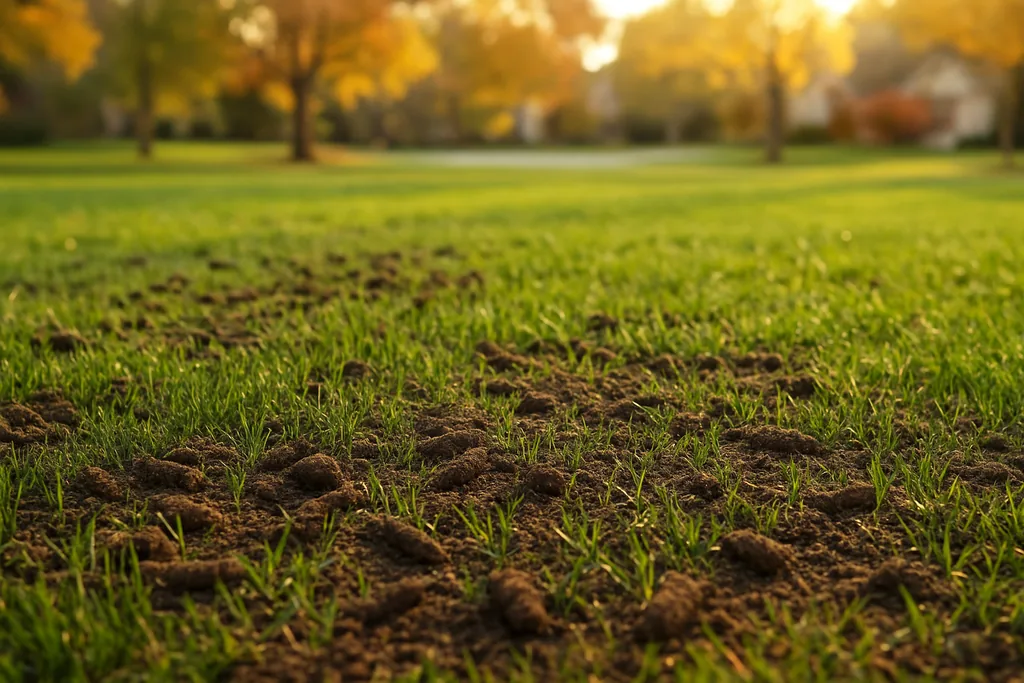
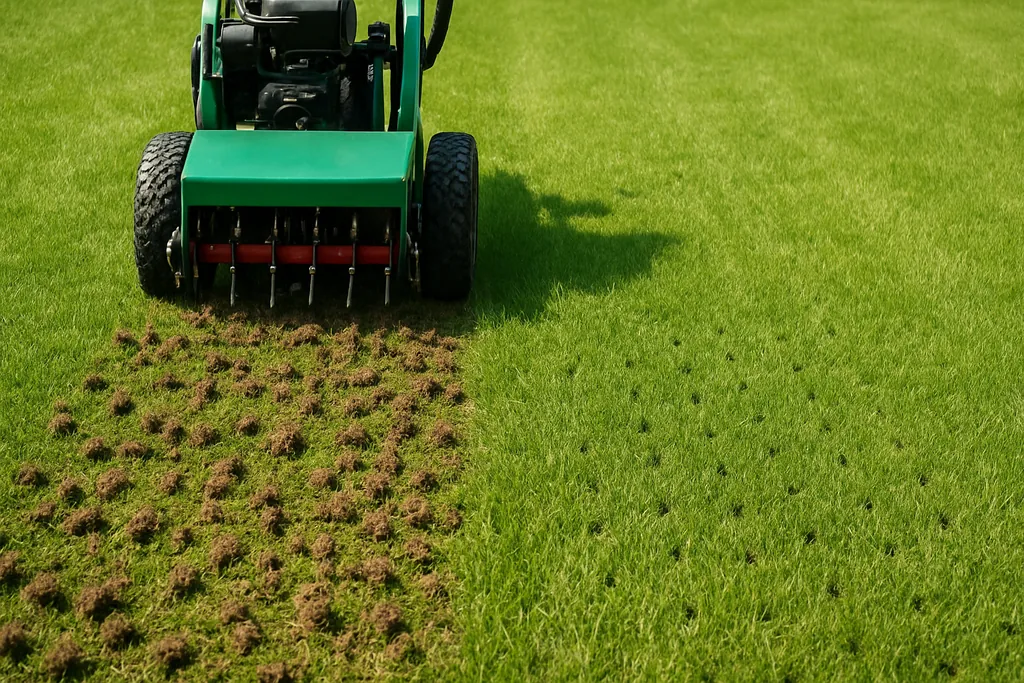
Core aeration, sometimes called plug aeration, uses hollow tines to pull thousands of small soil cores out of your lawn. Those little plugs you see scattered on the grass afterward are the whole point. Removing them relieves compaction, opens real channels for air and water, and gives roots room to spread. Core aeration is the method turf professionals recommend for compacted or clay-heavy lawns, and it is what we use on the vast majority of Quad Cities properties.
What is spike aeration?
Spike aeration uses solid spikes or tines to punch holes into the soil without removing anything. You will find spike aerators as tow-behind attachments, rolling push models, and even strap-on lawn shoes. They are cheaper and easier to use, and they do create temporary openings. The catch is that pushing a solid spike into clay compresses the soil around the hole, which can worsen compaction over time. Spike aeration is fine for a quick surface loosening on already-healthy soil, but it does not fix the underlying problem.
Core aeration vs spike aeration: side by side
Here is how the two compare on the things that matter:
- Compaction relief: Core aeration removes soil and truly relieves it. Spike aeration can add to it.
- Best soil type: Core is best for clay and compacted lawns. Spike is only okay on loose, sandy soil.
- How long it lasts: Core aeration results last a full season or more. Spike holes close up quickly.
- Overseeding: Core holes are ideal seed pockets. Spike holes give poor seed contact.
- Cost: Spike tools are cheaper, but core aeration delivers far more value per dollar.
For a Quad Cities lawn, that table lands squarely on core aeration for real results.
What about liquid aeration?
You may also see liquid aeration advertised. This is a sprayed soil conditioner that claims to loosen soil chemically rather than mechanically. It can be a helpful supplement on lawns that are hard to reach with a machine, but on our dense clay it is not a replacement for physically pulling cores. If your goal is to actually break up compaction, mechanical core aeration is still the gold standard, and liquid products work best as a follow-up rather than a substitute.
Which type is best for Quad Cities clay soil?
This is where local ground matters. The clay across Scott County and Rock Island County compacts fast and holds water, so it needs soil removed, not just holes poked. That points clearly to core aeration. Every fall we core-aerate lawns here and the improvement the following spring is consistent. If a service offers only spike aeration for a clay lawn, you are not getting the compaction relief you are paying for. For our soil, core aeration is the right tool almost every time.
When spike aeration is okay
To be fair, spike aeration is not useless. It can make sense for a small, sandy, already-healthy lawn where you just want to break the surface before overseeding, or for a quick touch-up between professional core aerations. If you own a spike tool and your soil drains well, using it will not hurt. Just do not expect it to solve compaction on clay, and do not use it on soil that is already dense.
How to choose the right aeration for your lawn
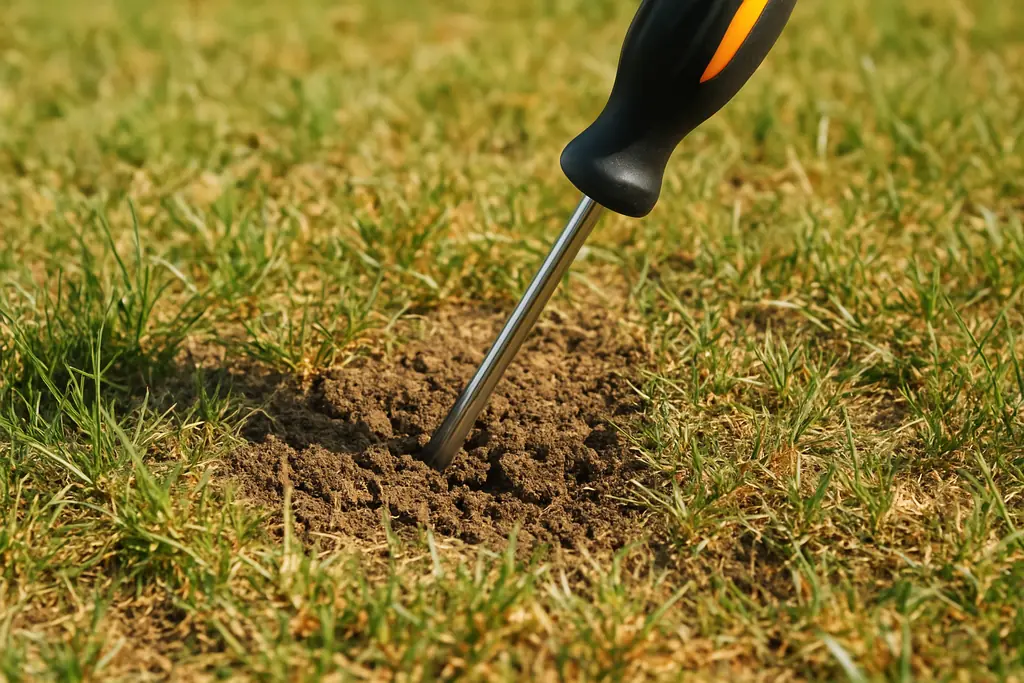
Run a simple test. Push a screwdriver into your lawn. If it slides in easily, your soil is loose and spike aeration might be enough. If it is a struggle to get a few inches deep, your soil is compacted and you need core aeration. Most Quad Cities lawns fall firmly in the second group. Pairing core aeration with our aeration and overseeding service gives you the biggest return, since fresh seed drops right into the plugs. If you are new to this, our guides on when to aerate your lawn and whether lawn aeration is worth it walk through timing and value.
How core aeration improves your lawn over time
The benefit of core aeration is not just a one-time fix. Each fall pass builds on the last. The first year relieves the worst of the compaction and lets roots push deeper. By the second year, water and nutrients move through the soil far more easily, so your lawn holds color longer into summer and bounces back faster from stress. Over several seasons, consistent core aeration slowly rebuilds the soil structure that clay lawns lose to foot traffic and weather. This is exactly why spike aeration falls short in the core aeration vs spike comparison. You cannot build long-term soil health by repeatedly compressing the ground. You build it by removing plugs and giving the soil room to recover, season after season.
Common aeration mistakes to avoid
Whichever method you choose, a few mistakes can undo the benefit. Watch out for these:
- Aerating dry, hard ground. The tines cannot penetrate. Aerate when the soil is slightly moist, ideally a day or two after rain.
- Using spikes on clay. As covered above, this compresses dense soil instead of relieving it.
- Skipping the follow-up. Aeration without overseeding and feeding leaves value on the table.
- Wrong time of year. Aerating in summer heat stresses cool-season grass. Fall is the window here.
- Raking up the cores. Let them break down naturally. They feed the soil as they dissolve.
Avoid those and either method performs at its best, though for clay the core aeration vs spike decision still favors pulling plugs.
Frequently Asked Questions
Is core aeration better than spike aeration?
For compacted or clay soil, yes. Core aeration removes plugs and relieves compaction, while spike aeration only pushes holes and can compress soil further. On the clay common in the Quad Cities, core aeration is the clear choice.
Does spike aeration actually work?
It creates temporary holes, which can help on loose, sandy soil. On dense clay, though, it offers little lasting benefit and can make compaction worse over time.
How much does core aeration cost in the Quad Cities?
A professional core aeration usually runs between 80 and 200 dollars depending on lot size and access. Bundling it with overseeding typically costs less than booking each separately.
Can you aerate a lawn with a fork?
A garden fork is a form of spike aeration and can help on very small areas, but it is slow and does not remove soil. For any full lawn on clay, core aeration with a proper machine is far more effective.
Ready to core-aerate your lawn the right way?
On Quad Cities clay, core aeration is the method that actually works, and fall is the ideal time to do it. Wade’s Property Services is locally owned, fully insured, and rated 5.0 stars across 118 Google reviews. See our lawn aeration service, check coverage on our Moline service area page, or request a free quote below. For independent turf guidance, the Purdue University Turfgrass Program is a solid outside resource.