If you want to know when to aerate your lawn in the Quad Cities, here is the short answer: early fall, usually from late August through October, is the best window for our area. That is when cool-season grasses are growing hard, the soil still holds warmth, and your lawn has time to heal before winter. Spring can work in a pinch, but fall gives you far better results across Davenport, Bettendorf, Moline, Rock Island, and the surrounding towns.
I am Wade Conner, owner of Wade’s Property Services. I grew up here and have spent years working with the heavy clay soil that defines yards across the Quad Cities. Aeration is one of the most underrated things a homeowner can do, and getting the timing right is most of the battle. This guide walks you through exactly when to aerate your lawn, why fall wins, and how our local soil changes the plan.
The best time to aerate your lawn in the Quad Cities
For our region, the best time to aerate is early fall. Cool-season grasses like Kentucky bluegrass, tall fescue, and perennial ryegrass make up most Quad Cities lawns, and they hit a strong growth spurt once the summer heat breaks. Aerating during that spurt lets the grass recover quickly and fill in the holes with fresh, healthy roots.
Aim for soil temperatures in the 50 to 65 degree range, which usually lines up with September and early October here. That timing also pairs perfectly with overseeding and fall fertilization, so you get three wins in a single visit. If you can only aerate once a year, do it in the fall.
Why fall aeration works best for Iowa and Illinois lawns
Fall aeration gives your lawn every advantage. The grass is actively growing, weed pressure is low, and there is enough time before the first hard freeze for roots to settle in. Fresh seed dropped into open aeration holes gets excellent soil contact, which is why fall aeration and overseeding go hand in hand.
Summer aeration, by contrast, stresses a lawn that is already fighting heat and drought. Aerating in July can open the door to weeds and dry out the root zone. That is why we schedule almost all of our aeration work for the fall, once the worst of the summer is behind us.
Can you aerate your lawn in spring?
Yes, spring aeration is possible, and sometimes it is the right call. If your lawn is badly compacted from winter or you missed the fall window entirely, a spring pass in April or May can relieve some of that pressure. Just know the tradeoffs.
When you compare spring vs fall aeration, spring has one real drawback: opening up the soil also gives crabgrass and other weeds a perfect place to sprout. If you aerate in spring, hold off on pre-emergent weed control in those spots, since the two work against each other. For most homeowners, fall is still the smarter, cleaner choice.
How Quad Cities clay soil changes the timing
Here is where local knowledge matters. Much of Scott County and Rock Island County sits on heavy clay soil. Clay compacts fast, holds water, and squeezes the air out of the root zone. That is exactly the problem aeration solves, but it also means our lawns need aeration more often than the sandy soils you read about in national guides.
Aerating clay soil works best when the ground is slightly moist, not soaking wet and not bone dry. A good rule is to water the day before or aerate a day or two after a light rain. Pulling cores from properly moist clay lets the tines dig deep and actually break up the compaction instead of bouncing off a hard surface.
When to aerate your lawn based on your grass type
Almost every lawn in the Quad Cities is a cool-season grass, and that is the main reason we point people toward fall. Knowing when to aerate your lawn really comes down to knowing what is growing in it.
- Kentucky bluegrass: Loves fall aeration. It spreads by underground runners, so open soil in September helps it knit new growth together and thicken up.
- Tall fescue: Deep-rooted and tough, but it still recovers best in fall. Aerate and overseed together to keep it dense.
- Perennial ryegrass: Germinates fast, which makes fall aeration and overseeding a quick win before winter.
If you have a mix of these, and most established Quad Cities lawns do, a single fall pass covers all of them. That is the beauty of figuring out when to aerate your lawn once and building a simple yearly habit around it. You stop guessing, and your grass stops fighting the clay underneath it.
How aeration actually helps your lawn
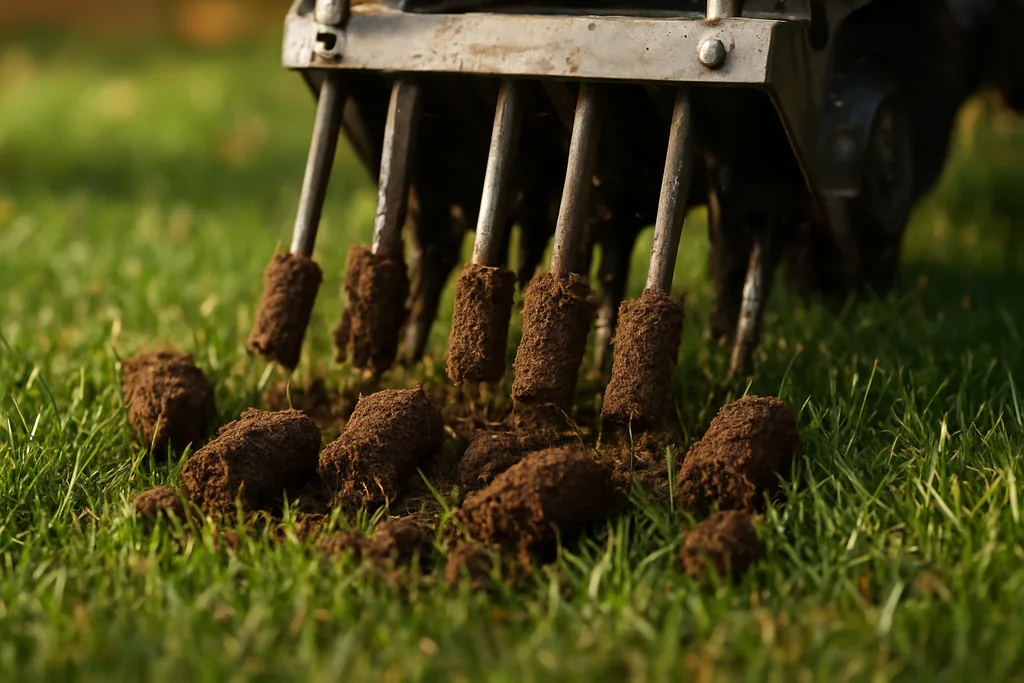
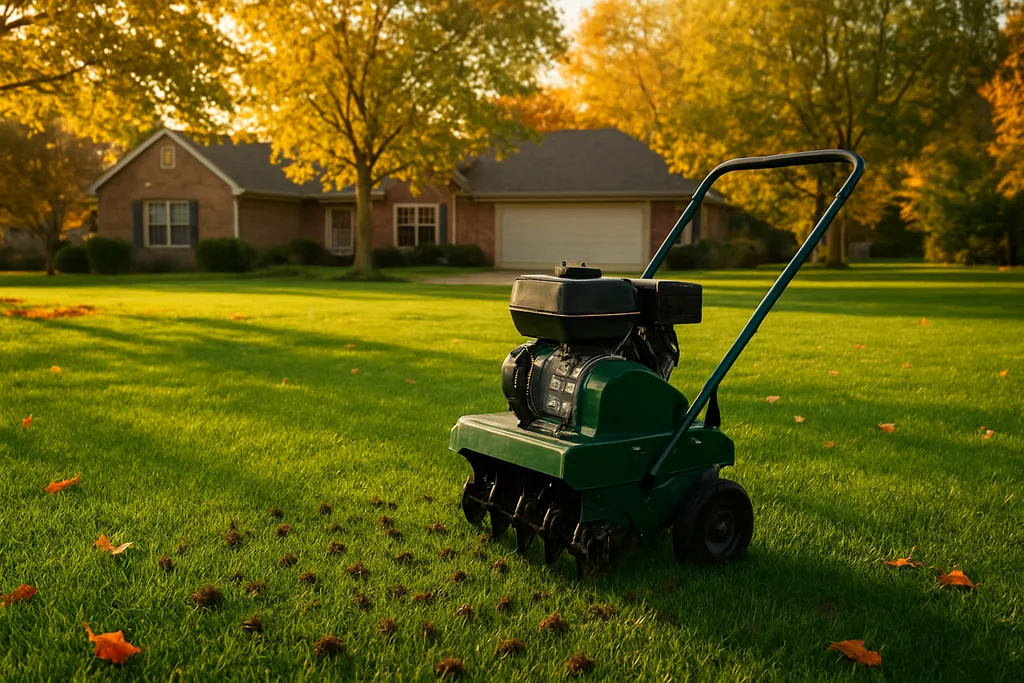
It helps to understand what a core aerator is doing down there. The machine pulls thousands of small plugs of soil out of the ground, which instantly relieves compaction and opens up channels for air, water, and nutrients to reach the roots. On our dense clay, those channels are a big deal.
Once the pressure is off, roots grow deeper and stronger, water soaks in instead of running off, and fertilizer actually reaches the root zone instead of sitting on a hard crust. That is why deciding when to aerate your lawn matters so much. Do it while the grass is growing and it turns those open channels into thick new turf. Do it at the wrong time and you simply create openings for weeds.
5 signs your lawn needs aeration now
Not sure if this is your year? Watch for these signs your lawn needs aeration:
- Water pools or runs off instead of soaking in after rain or watering.
- The soil feels hard and a screwdriver is tough to push in a few inches.
- Thatch is thick, more than half an inch of spongy buildup between grass and soil.
- Heavy foot traffic areas look thin, worn, or bald.
- Your lawn looks tired even after watering and feeding.
If two or more of these sound familiar, put aeration on the calendar this fall.
How often should you aerate your lawn?
Most Quad Cities lawns benefit from aeration once a year, and our clay-heavy yards are right in that camp. If you have lighter soil or a newer lawn with little traffic, every other year may be plenty. Lawns that host a lot of play, pets, or parking should stick to a yearly schedule.
The honest answer on how often to aerate your lawn comes down to how compacted it gets. Clay soil and busy yards need it more often. When in doubt, an annual fall pass is a safe, effective routine.
What to do right after you aerate
Aeration opens a short window where your lawn soaks up everything you give it, so make the most of it. This is the ideal moment to overseed and fertilize. Our aeration and overseeding service combines both in one visit, dropping premium seed straight into the open holes for excellent germination.
Follow up with a starter feeding and keep the soil consistently moist for the first couple of weeks. Fall aeration paired with our 5-step lawn care program sets your grass up to green up thick and early next spring. Leave the soil cores on the surface, since they break down on their own and feed the lawn.
When you should not aerate your lawn
Timing cuts both ways. Skip aeration when the ground is frozen, during a summer heat wave, or when the soil is either dust-dry or a muddy mess. Newly seeded or newly sodded lawns should also wait until they are well established, usually a full growing season, before their first aeration.
If you are unsure whether your lawn is ready, that is a good time to bring in a local pro who can read the soil and the season for your specific property.
Frequently Asked Questions
What month is best to aerate your lawn in the Quad Cities?
September is usually the best month here, with late August and early October close behind. Those weeks combine active grass growth with warm soil and cooler air, which is the ideal recipe for recovery.
Do you really need to aerate your lawn?
If your soil is compacted, then yes. On our local clay, compaction is common, and aeration is one of the few things that genuinely fixes it. Lawns on loose, sandy soil with light use can go longer between aerations.
Can you aerate your lawn too early?
You can. Aerating in the heat of summer stresses the grass and invites weeds. Wait until the summer heat breaks and cool-season growth picks back up, which is early fall for the Quad Cities.
Should you aerate before or after mowing?
Mow first, a little shorter than usual, then aerate. A shorter cut helps the tines reach the soil and makes it easier to spread seed evenly afterward.
Ready to aerate this fall?
Getting the timing right is the difference between a lawn that bounces back and one that stays stuck in compacted clay. If you would rather leave the guesswork to a local team that knows Quad Cities soil, we are here to help. Wade’s Property Services is locally owned, fully insured, and rated 5.0 stars across 118 Google reviews. See our lawn aeration service, check whether we cover your neighborhood on our Davenport service area page, or request a free quote to lock in your fall aeration. For the science behind cool-season timing, the Iowa State University Extension is a great outside resource.