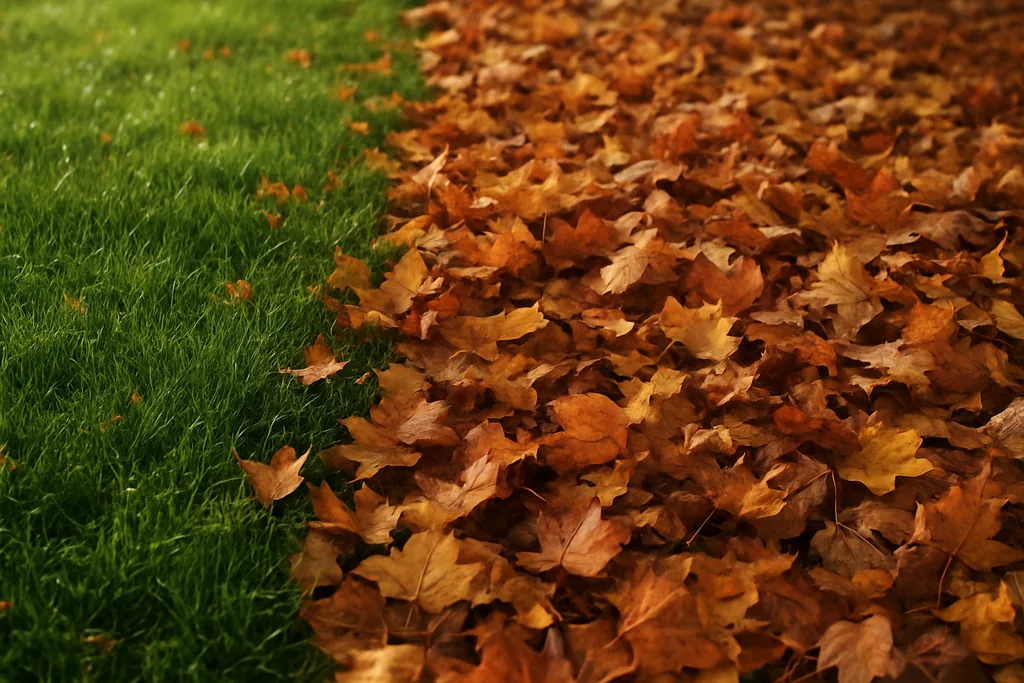
Should you remove leaves from lawn areas, or is it fine to leave them? The honest answer is that a thick layer of leaves should come off your lawn, but a light scattering can actually help if you mulch it in. Leaving heavy leaves on the grass through a Quad Cities winter smothers the lawn and breeds disease, while a thin layer chopped up by the mower feeds the soil. Here is exactly when to remove leaves, when to leave them, and how to tell the difference.
I am Wade Conner, owner of Wade’s Property Services. This is one of the most common fall questions I get from homeowners across Davenport, Bettendorf, Moline, and Rock Island, so let me give you the straight answer.
Should you remove leaves from lawn areas?
For most lawns, yes, you should remove a heavy leaf layer. When leaves pile up and get wet, they mat into a dense blanket that blocks sunlight and traps moisture against the grass. Under our winter snow, that trapped moisture is a perfect breeding ground for snow mold and disease, and the lack of light weakens or kills the grass underneath. So if your lawn disappears under leaves every fall, removing them is the right call. The exception, which we will get to, is a light scattering that can be mulched in rather than removed.
What happens if you leave leaves on the lawn
Leaving leaves on the lawn through winter causes real problems. A thick, wet mat smothers the grass, blocking the light and air it needs even in dormancy. That trapped moisture invites snow mold, a fungal disease that shows up as matted, discolored patches when the snow melts. Pests and rodents also love to nest in leaf litter over winter. Come spring, you are often left with dead patches, thin areas, and a soggy, weed-friendly lawn that needs reseeding. What looked like a way to save an afternoon in the fall turns into weeks of repair in the spring.
When it is okay to leave leaves
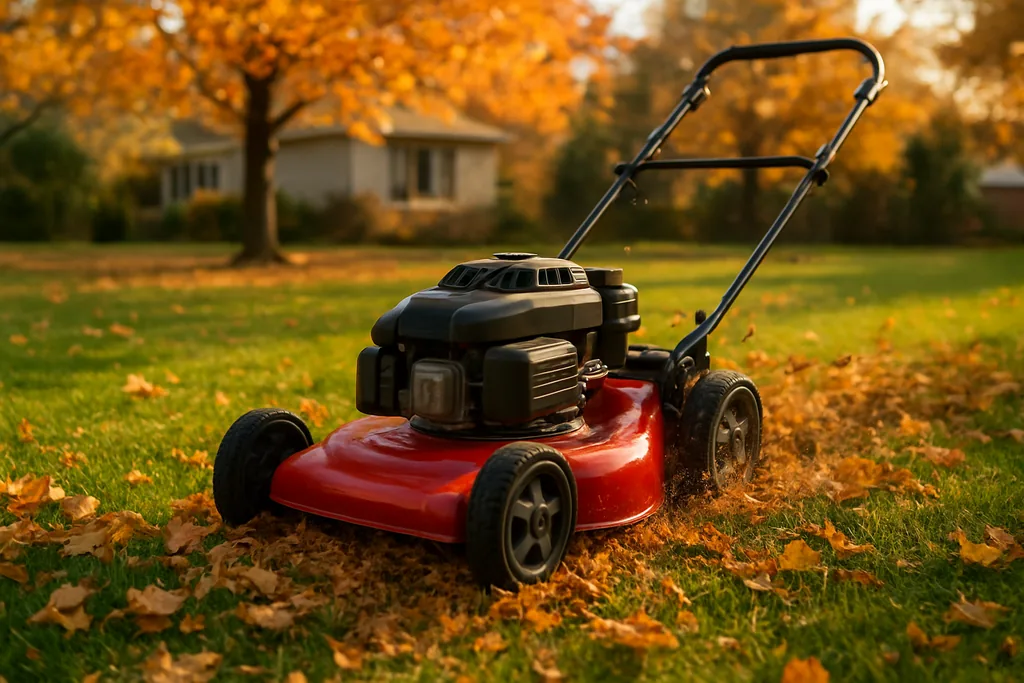
Here is the nuance most people miss. A light scattering of leaves, the kind you can still see plenty of grass through, does not need to be removed. In fact, if you run a mulching mower over a thin layer, it chops the leaves into tiny pieces that fall between the grass blades and break down, returning nutrients and organic matter to the soil. This is genuinely good for the lawn. The key is depth. A thin, dry layer can be mulched in, but a thick, wet blanket that hides the grass has to come off. When in doubt, if you cannot see the grass through the leaves, remove them.
Mulching leaves vs removing them
Mulching and removing are both valid, and the right choice depends on how many leaves you have. Mulching works when the layer is light: you simply mow over the leaves, ideally with a mulching blade, and let the shredded pieces feed the soil. It is fast, free, and good for the lawn. Removal is the answer when leaves are deep, wet, or matted, since no amount of mowing turns a thick blanket into healthy mulch. Many Quad Cities yards need a mix, mulching early light drops and removing the heavy end-of-season fall. Our guide on the leaf removal service covers your options.
Are leaves bad for grass?
Leaves themselves are not the enemy. In a forest, fallen leaves break down and enrich the soil. The problem is that a manicured lawn is not a forest floor. Grass needs consistent light and air, and a thick leaf layer denies it both, especially over a long winter under snow. So leaves are only bad for grass when they pile up faster than they can break down. Shredded thin and left to decompose, they help. Left whole and deep, they harm. Understanding that distinction is the whole answer to whether you should remove leaves from your lawn.
What about leaves in your beds?
Beds are a different story from the lawn. A layer of leaves in your planting beds can actually act as free winter mulch, insulating perennial roots and suppressing weeds. Many gardeners intentionally leave chopped leaves in beds for this reason. The cautions are to avoid piling wet leaves directly against plant stems or crowns, where they can cause rot, and to make sure you are not smothering low ground covers. So while you clear the lawn, you can often let a moderate layer of leaves stay in the beds, or move shredded lawn leaves into the beds as mulch.
The best approach for a Quad Cities lawn
For our climate, the practical plan is simple. Through the fall, mulch light leaf drops into the lawn with your mower as you mow. As the drop gets heavier and the leaves start to pile up and mat, switch to removing them, in a couple of passes rather than one giant end-of-season job. Clear the lawn completely before the first lasting snow so nothing sits under the snow all winter. Use or leave a moderate layer of chopped leaves in your beds as mulch. That balance gives you the soil benefits of leaves without the smothering and disease that come from leaving too many on the grass.
Signs you have waited too long
A few signs tell you the leaves need to come off now, not later. If you can no longer see grass through the leaves, if the layer feels wet and matted when you walk on it, or if it has started to smell musty, the lawn is already being smothered. After a rain or snow, whole leaves stick together into a heavy blanket that only gets worse. If you are seeing any of these, it is time to remove the leaves promptly, before they cause the dead patches and mold that show up in spring.
How to decide: remove or leave your leaves
When you are standing in the yard trying to decide, use one simple test. Look down at the grass. If you can clearly see the blades through a thin, dry scattering of leaves, you can mulch them in with the mower and leave them. If the leaves hide the grass, feel wet or matted, or have started sticking together, they need to come off. That single visual check answers the question of whether you should remove leaves from lawn areas for almost any yard. When people ask me should you remove leaves from your lawn surfaces, I tell them to stop guessing and just look at whether the grass is still visible. The grass will tell you what it needs.
Frequently Asked Questions
Do leaves really cause snow mold?
A thick, wet leaf layer traps moisture against the grass, which is exactly what snow mold needs to develop under the snow. Clearing heavy leaves before winter is one of the best ways to prevent it.
Is it better to rake or mulch leaves?
Mulch a light layer with your mower to feed the soil. Rake or remove a heavy layer, since mulching cannot turn a thick, wet blanket of leaves into healthy soil cover.
Is it OK to leave leaves on the lawn over winter?
Only if the layer is very light and you mulch it in with a mower. A thick, wet blanket of leaves smothers the grass and breeds snow mold over winter, so heavy leaf cover should be removed before the snow.
Can I just mow over leaves instead of raking?
Yes, when the layer is light. A mulching mower chops thin leaf cover into pieces that feed the soil. For deep or wet leaves, though, mowing is not enough and you need to remove them.
Are leaves good or bad for grass?
Both, depending on depth. Shredded thin and left to decompose, leaves feed the soil. Left whole and piled deep, they block light and air and harm the grass. Depth is what makes the difference.
Should I put leaves in my garden beds?
A moderate layer of leaves, especially chopped, makes good free winter mulch in beds. Just avoid piling wet leaves against plant stems or crowns, where they can cause rot.
Not sure whether to remove or mulch your leaves?
If your lawn is disappearing under leaves, we can help you clear it the right way. Wade’s Property Services is locally owned, fully insured, and rated 5.0 stars across 118 Google reviews. See our leaf removal service, our seasonal cleanup service, check coverage on our Rock Island service area page, or request a free quote below. For turf disease and leaf research, the Purdue University Turfgrass Program is a helpful outside resource.