The 7 Most Common Hedge Problems Iowa Homeowners Face
1. Bagworms (most common pest)
What you see: 1–2 inch teardrop-shaped “bags” hanging from the hedge — they look like little pinecones made of leaves and twigs. Heavy infestations can defoliate an arborvitae or juniper hedge in weeks.
What it is: Bagworm larvae living inside the bags, eating the foliage. Hosts: arborvitae, juniper, cedar, spruce.
How to fix:
- Light infestation: Hand-pick the bags between October and April. Burn or trash — don’t compost.
- Active infestation (May–July): Treat with Bt (Bacillus thuringiensis) — organic, targets only caterpillars.
- Heavy infestation: Professional treatment with stronger options.
Once bagworms hatch in late May, they’re vulnerable for about 6 weeks. After that, the bag protects them from sprays.
2. Boxwood Blight (the worst hedge disease in the QC hedge problems iowa right now)
What you see: Dark brown leaf spots, rapid leaf drop from the bottom up, black streaks on stems. Boxwood blight can defoliate an entire boxwood hedge in 2–4 weeks.
What it is: A fungal disease (Calonectria pseudonaviculata) spreading through Iowa and Illinois landscapes. Survives in fallen leaves and on tools.
How to fix:
- Confirm first — bring a sample to your local Iowa State Extension office
- Sanitize: Remove all infected leaves and debris. Sterilize tools with 70% isopropyl alcohol between cuts
- Prune affected branches well below visible damage
- Fungicide treatment — preventive sprays can help neighbors stay clean
- Severe cases: Replacement with blight-resistant cultivars
For Zone 5b disease management, the Iowa State University Extension is the regional reference.
3. Winter Burn (looks dramatic, often recoverable)
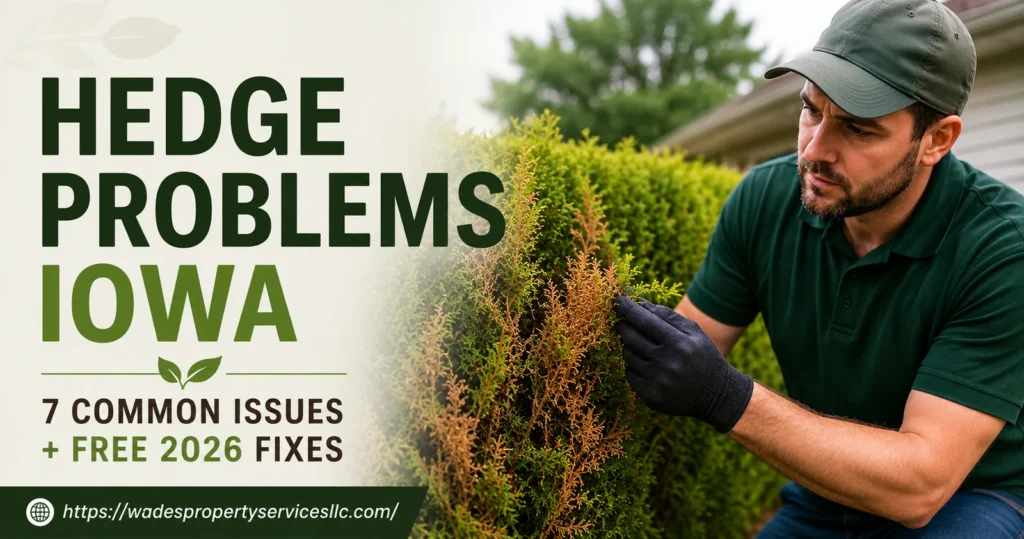
What you see: Brown, scorched-looking foliage on the south- or west-facing side of evergreen hedges, especially after a windy winter. Common on arborvitae, boxwood, yew.
What it is: Not a disease — drying. Cold winter wind pulls moisture from leaves faster than frozen roots can replace it.
How to fix:
- Wait until late spring to assess. New growth often pushes through and covers the damage.
- Prune dead material in May, after you can see what survived
- Prevent next year: Anti-desiccant spray in late fall, burlap windbreaks, deep watering before ground freezes
4. Drought Stress
What you see: Wilting, leaf yellowing, premature leaf drop, dieback at branch tips. Common late summer.
How to fix:
- Deep watering: Water at the base, slowly, until top 6 inches of soil saturated
- Mulch: 2–3 inches of organic mulch (never touching trunk)
- Check irrigation: Drip lines clog; sprinklers miss the inside of dense hedges
5. Scale Insects
What you see: Small bumps on stems and leaf undersides. Sticky residue (honeydew). Black sooty mold. Yellowing leaves.
How to fix:
- Light: Horticultural oil spray when plant is dormant (late winter/early spring)
- Active: Systemic insecticide at the base — most effective
- Heavy: Pruning out worst branches plus systemic treatment
6. Improper Trimming (self-inflicted)
What you see: Wide top, narrow bottom. Bare lower branches. Brown patches where someone cut into old wood on arborvitae or evergreen.
How to fix:
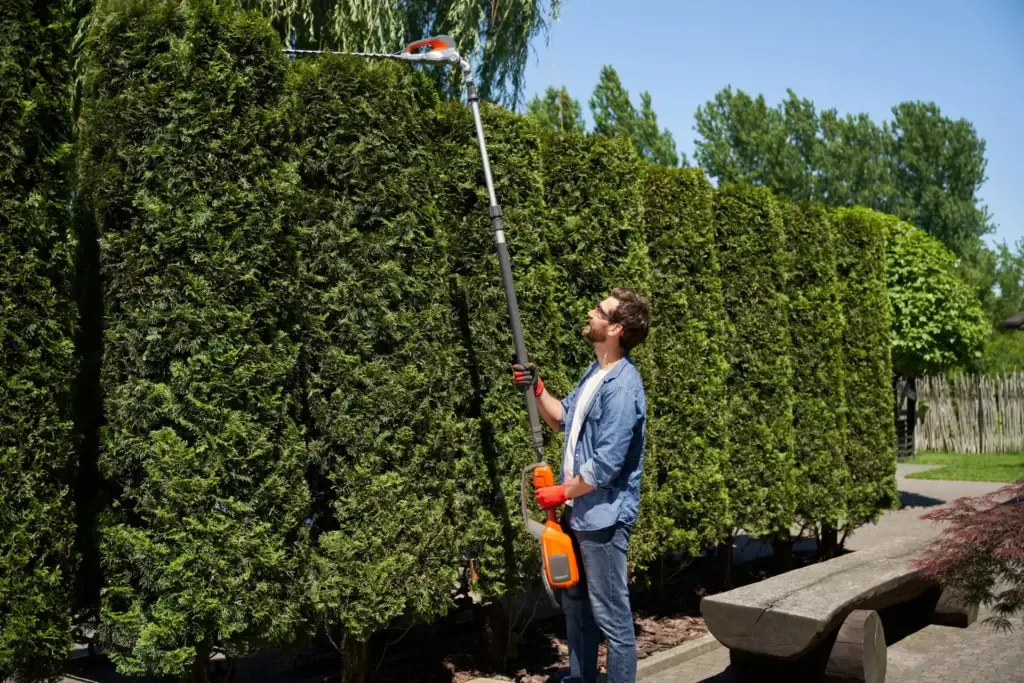
- Apply the taper rule — base slightly wider than top
- Never cut past the green on arborvitae
- Multi-year rejuvenation for over-cut hedges (1/3 each year for 3 years)
- Hire a pro if not confident
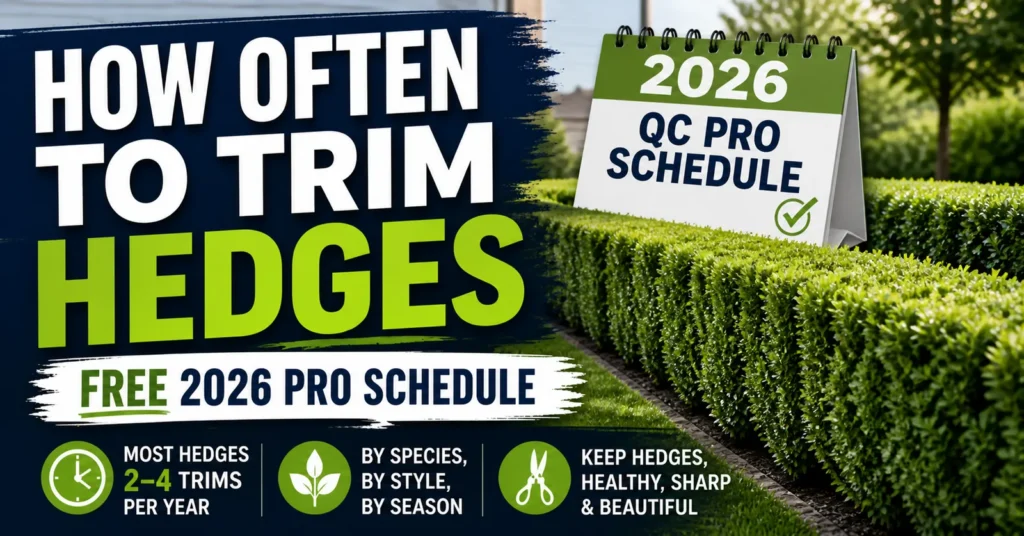
Full technique: How to trim hedges like a pro.
7. Root Damage
What you see: Sudden decline in part of the hedge after construction, new pavement, or heavy soil compaction.
How to fix:
- Diagnose: Tell-tale = recent project nearby
- Aerate the soil around the affected area
- Mulch deeply (2–3 inches) and keep traffic off root zone
- Patient watering and feeding — recovery can take a season or two
- Severe damage: Replacement may be the only fix
Hedge Health Checklist (Walk Your Property Monthly)
Spend 5 minutes per month doing this and you’ll catch most hedge problems Iowa can throw at you, early:
- Look at each hedge from 20 ft away — any patches a different color?
- Walk the hedge — any branches obviously dead or dying?
- Check undersides of leaves — any unusual bumps, webs, or eggs?
- Look at the bottom 12 inches — is foliage thinning?
- Soil at the base — wet, dry, or cracked?
- Any “bags” hanging on arborvitae or juniper? (bagworms)
If you find something unidentifiable, take a photo and send it to your local extension office or contact Wade’s for a free inspection.
When to Call a Pro
DIY fixes work for many hedge problems. Call a pro for:
- Suspected boxwood blight — confirmation matters; treatment failure can cost the entire hedge
- Heavy bagworm or scale infestations
- Multi-year decline with no obvious cause
- Damage to mature, irreplaceable hedges where mistakes are expensive
- Diagnosis when you’re not sure what’s wrong
Frequently Asked Questions
Why is my hedge turning brown?
Most likely: winter burn (one side brown), drought stress (late summer), or disease (look for spots or sudden defoliation).
Why is my boxwood losing leaves?
Boxwood blight is the leading suspect. Look for dark brown leaf spots and black streaks on stems. Bring a sample to your local extension office for confirmation.
My arborvitae has brown spots in the middle. Is it dying?
Probably not. Arborvitae naturally sheds inner foliage every fall — part of normal growth. If brown is spreading from the outside in, that’s a different problem.
Can a dying hedge be saved?
Often yes — depends on cause. A hedge with one or two dying branches is fixable. A hedge with 50%+ dieback is harder. Get an inspection before tearing it out.
Do you treat hedge diseases in the Quad Cities?
Wade’s diagnoses and offers cultural treatments (sanitation pruning, fertilization, watering plans). For chemical treatments, we partner with licensed applicators.
How do I prevent hedge problems?
Three things: trim correctly using the taper rule; sterilize blades between hedges; deep water during droughts and mulch the base. Proper trimming and watering prevent 80% of issues.
Free Hedge Inspection in the Quad Cities
Not sure what’s wrong with your hedge? Don’t guess. We’ll come out, diagnose, and quote the fix — no obligation.
📞 Call (309) 235-9237
📧 Request a free inspection
Wade’s serves Davenport, Bettendorf, Moline, Rock Island, East Moline, Silvis, Milan, Eldridge, LeClaire, Geneseo, Coal Valley, Preemption, and Sherrard.
Hedge trimming Quad Cities full service info
How to trim hedges DIY guide